Prisons are likely to become more – rather than less – significant centers of gravity for the jihadist movement. We discuss some ways in which prisons matter during the radicalization process.
Scholars suggest that an individual’s criminal past impacts possible terrorist futures for the jihadist movement. In particular, Basra et al.’s research has emerged four main themes.

Radicalization and recruitment
The redemption narrative offers a radical change of values and behavior while encouraging a guilt-free sense of rebellion and anti-establishment. Crime is justified on religious grounds, whether or not the recruit has a religious background or understanding of Islam. In this instance, recruitment can be viewed as an unintended merging of criminal and jihadist narratives.
Prisons as a milieu
Prisons expose vulnerabilities in individuals susceptible to “cognitive openings” and the willingness to identify with new beliefs. Networking opportunities in prison lay the groundwork for radicalization, with rapid mobilization and solidification of radical beliefs occurring post-release.
Skills transfers
Jihadists also take advantage of criminal skills in prison, such as connections to gangs and weapons, and the soft skill of staying under the radar by using fake documents and safe houses. Familiarity with violence is also considered a skill transfer, as recruits with violent pasts are less likely to be psychologically hesitant to commit violent terrorist acts.
Criminal financing
Petty crime and criminal operations are known to finance terrorists, particularly their return to Syria. There has been a shift in terrorist financing from state-funded to micro-level self-funded methods (through criminal efforts). Jihadists also leverage the criminal financial strategy of encouraging a low barrier to entry, sharing their ideology to justify their crimes, and encouraging continued criminal behavior by simply shifting the purpose to meet jihadist ideals.
Institutional Responses
These findings challenge traditional views of radicalization and significantly impact counter-terrorism responses, forcing authorities to consider prisons a breeding ground for radicalization where, previously, foreign fighters were recruited from universities and places of religious worship.
Again, the criminal challenges of society (which now include terrorism) come back to addressing societal needs and effective rehabilitation efforts to impact change. Exploring this demands an entirely new discussion, but essentially, incorporating rehabilitation and post-release services as a priority in prisons rather than punitive measures could protect the vulnerable isolation of offenders and reduce recidivism (in the form of terrorist action).
There are several examples of jihadists who have emerged from the criminal-terrorist nexus in prison and caused severe damage. The case of Omar el-Hussein demonstrates both arguments — that prisons are a location for radicalization and that offenders are vulnerable people whose rehabilitation and reintegration are largely neglected.
El-Hussein was radicalized in prison and even red-flagged by authorities. After his release, a technicality prevented him from accessing probation services, leading him to be homeless and jobless, during which rapid radicalization occurred. Destitute and radicalized, he carried out the deadly shootings at a cultural center and a synagogue in Copenhagen in February 2015.
References
- Basra, R., Neumann, P., and Brunner, C. (2016). Criminal Pasts, Terrorist Futures: European Jihadists and the New Crime-Terror Nexus. London: CSR.
- Burchett, J. & Weyembergh, A. (2023). Prison and detention conditions in the EU. IPOL | Policy Department for Citizens’ Rights and Constitutional Affairs. Accessed on September 23, 2023, from https://www.europarl.europa.eu/RegData/etudes/STUD/2023/741374/IPOL_STU(2023)741374_EN.pdf
- Clarke, C. (2016). Drugs and Thugs: Funding Terrorism through Narcotics Trafficking. Journal of Strategic Security, 9(3).
- Mikkelsen, R. (2007). U.S. prison system a costly and harmful failure: report. Reuters. Accessed on September 23, 2023, from https://www.reuters.com/article/us-usa-prisons-idUSN1841666120071119
- UNODC. (2017). Roadmap for the development of prison-based rehabilitation programs. Criminal Justice Handbook Series. Accessed on September 23, 2023, from https://www.unodc.org/documents/justice-and-prison-reform/17-05452_ebook.pdf
As borders have become more porous, criminal mobility has become more accessible, contributing to transnational crime. Let’s assess the push and pull factors contributing to Nigeria’s Black Axe migration to South Africa.

Introduction to black axe
The Neo-Black Movement (NBM) began as a confraternity in Nigeria, Benin City. The group was established at the University of Benin during the 1970s as a student self-help association but gradually transformed into a criminal group in response to the political dictatorship in Nigeria, acting as a violent weapon to be used by political parties against the opposition.
The criminal splinter group became known as Black Axe and has since earned a notorious reputation for violence, murder, cult-like behavior, and transnational crime. While the legally-operating NBM has disassociated itself with Black Axe, many publications and research efforts still group the two organizations together. This analysis of their criminal mobility uses news articles, academic journals, and court documents to conclude that Black Axe began as an emergent criminal group due to political turmoil but has since developed to become a strategic, international organization. Headquartered in Nigeria, Black Axe “zones” are highly flexible, connected, and fluid, able to spread worldwide due to their flexibility and internal social bonds.
While most online literature focuses on Black Axe's presence in Italy, where they have been dubbed the “Nigerian Mafia,” I have selected to analyze their presence in South Africa due to my personal experience of witnessing Nigerian criminal organizations in action and my understanding of the South African landscape.
It is important to note that Black Axe's presence in Italy is strong, where criminal activity and methods differ greatly from that in South Africa — a discussion and analysis on its own.
General Impression of the Global Dimension of the Group
Since the 1980s, Nigerian organized crime has migrated worldwide, developing a strong presence in Italy and South Africa. Today, Black Axe operates across Africa and Europe, and they also target the United States of America via the Internet.
Push factors prompting migration of Black Axe
Initially, the international migration of Nigerian criminal groups developed due to a combination of three factors: the surge of wealth and accompanying corruption due to the discovery of oil in the 1950s, the second economic depression in the 1980s, and widespread corruption that led to mass migration.

South African pull factors
Due to pull factors, Black Axe and other Nigerian criminal organizations were established in South Africa, a fragile state with a high corruption and gang violence rate, making it an ideal location for facilitating various transnational criminal transactions.
Earlier reports of Black Axe operations in South Africa refer to drug trafficking crimes, where Axemen established strategic, operational bases near target clientele, such as brothels, and took advantage of South Africa’s post-apartheid political and social transition to succeed. Groups sometimes overtook entire neighborhoods, such as Hillbrow in Johannesburg.
Over time, the group adapted to flourish in cybercrimes such as internet fraud, romance scams, and money laundering to target international markets and leverage legal knowledge to avoid extradition and capture. South Africa has also served as a strategic springboard for Black Axe members to access more lucrative countries, such as Canada, the United States, and the United Kingdom. However, this does not necessarily describe transplantation, as the criminal operations and methods differ from one location to another.
South African PUSH factors
It is important to note that the racial tension and inequality in South Africa have the potential to develop into a push factor, encouraging Nigerian criminal organizations to move (or perhaps adapt their criminal behavior) as xenophobia creates a hostile environment. Nigerian gangs (and non-criminal Nigerians) have been the victims of violent attacks, facing extortion and death.
Black Axe networks
Despite Nigeria’s consistency as a politically and economically unstable country, Black Axe remains headquartered in Benin City and operates in regional areas called “zones.” The development of trusted networks with shared criminal objectives is explained by Corentin Cohen, who says that “networks of individuals working together for solidarity, economic or political objectives became categorized as organized crime or as a mafia.”
During an investigation into the pressing cyber threat in Africa, Rory Corcoran, acting head of Interpol’s new Financial Crime and Anti-Corruption Centre, said, “We are dealing with a highly organized international network. These guys are not opportunists… We’re mapping them out around the world.”
Court documents allege that Black Axe maintains a pyramidal command structure with zones worldwide, with the worldwide headquarters based in Benin City in Nigeria. Although the headquarters are based in Nigeria, the organization is not localized, contradicting the existing research of a “mafia” organization.

Criminal Mobility of Black Axe Members
Initially, it appears as though Black Axe demonstrates a unique convergence of both the importation/deprivation model of criminal mobility (as members are “pushed” out of a volatile home country in search of a better life) and the strategic, rational, and highly mobile theory of criminal mobility as the organization overlaps with the NBM and recruitment process is fairly strict, reflecting that of a confraternity.
A closer assessment of the group’s global expansion, strategic use of South Africa, and connection with the NBM suggest that Black Axe is predominantly a highly mobile and strategic organization with an operational base in Nigeria and territorial “zones” worldwide. The specific criminal activity and control methods differ depending on the environment of these territories, suggesting that these “zone” leaders have some authority to orchestrate actions and make international connections to thrive in the specific environment.
Limitations in the analysis
There are limitations in this analysis, with the following being the most significant.
- The overlap with the NBM makes it difficult to identify Black Axe members in leadership who buffer themselves from criminal activity.
- Sensationalized headlines mislead the reality of the group’s progression from dealing drugs to romance scams in South Africa, such as the BBC’s headline The ultra-violent cult that became a global mafia.
- The secrecy surrounding the Black Axe confraternity cult’s origins and methods makes it difficult to investigate true motives, recruitment methods, and strategies for expansion.
- Using the example of Italy and South Africa, Black Axe, it is obvious that different primary crimes and methods in various regions make it difficult to assess the criminal organization as a whole.
- Alikening Black Axe and the “Nigerian Mafia” to the Italian mafia introduces misconceptions about the organization, including their origins and methods.
References
- Becucci, S. (2022). Nigerian criminal groups in Italy: Organizational structure, drug trafficking and sexual exploitation. Quaderni Di Sociologia, (88–XLVI), 71–91. https://doi.org/10.4000/qds.4839
- Bernardo, C. (2017). Migration of the Nigerian mafia. University of Cape Town News. Accessed on September 17, 2023, from https://www.news.uct.ac.za/article/-2017-05-16-migration-of-the-nigerian-mafia.
- Burke, J. (2022). Gangs of cybercriminals expanding across Africa, investigators say. The Guardian. Accessed on September 17, 2023, from https://www.theguardian.com/technology/2022/nov/27/gangs-of-cybercriminals-are-expanding-across-africa-investigators-say.
- Campana, P. (2011). Eavesdropping on the Mob: The Functional Diversification of Mafia Activities across Territories, European Journal of Criminology, 8(3), 213–228.
- Cohen, C. (2022). The “Nigerian mafia” feedback loop: European police, global media, and Nigerian civil society. Trends Organ Crim. https://doi.org/10.1007/s12117-022-09471-0
- Daily Trust. (December 29, 2021). Neo-Black Movement dissociates itself from cult group, Black Axe. Accessed on September 17, 2023, from https://dailytrust.com/neo-black-movement-dissociates-self-from-cult-group-black-axe/
- Dolley, C. (2022). Clash of the cartels: Unmasking the global drug kingpins stalking South Africa. Maverick 451. Evans, J. (2023). Alleged ‘Black Axe’ scammers challenging extradition to US. News 24. Accessed on September 17, 2023, from https://www.news24.com/news24/southafrica/news/alleged-black-axe-scammers-challenging-extradition-to-us-20230607
- Hassan, T. (2022). Nigeria: Events of 2022. Human Rights Watch. Accessed on September 17, 2023, from https://www.hrw.org/world-report/2023/country-chapters/nigeria.
- Hyman, A. (2021). Nigerian mafia leaders arrested after Hawks swoop in Cape Town. Times Live. Accessed on September 17, 2023, from https://www.timeslive.co.za/news/south-africa/2021-10-19-nigerian-mafia-leaders-arrested-as-sa-and-us-forces-swoop-in-cape-town/.
- Interpol. (2022). Financial crime: South African fraud gang dismantled. Interpol News and Events. Accessed on September 17, 2023, from https://www.interpol.int/en/News-and-Events/News/2022/Financial-crime-South-African-fraud-gang-dismantled.
- Mail & Guardian. (2002). Nigerians dominate cocaine trade in SA. Accessed on September 17, 2023, from https://mg.co.za/article/2002-05-08-nigerians-dominate-cocaine-trade-in-sa/.
- Northcott, C., Judah, S., & Macjob, P. (2021). The ultra-violent cult that became a global mafia. BBC. Accessed on September 17, 2023, from https://www.bbc.com/news/world-africa-59614595
- Nwakuonr, G.A. & Nwanne, C. (2018). Why South Africans attack Nigerians. The Guardian. Accessed on September 17, 2023, from https://guardian.ng/features/why-south-africans-attack-nigerians/.
- SAFLII. (September, 2022). Osagiede and Others v S (A95/22) [2022] ZAWCHC 166; [2022] 4 All SA 845 (WCC). Accessed on September 17, 2023, from http://www.saflii.org/za/cases/ZAWCHC/2022/166.html.
- United States of America v. Osagiede, 2021R00423/JLH/W. (United States District Court of New Jersey). Accessed on September 17, 2023, from https://www.justice.gov/d9/press-releases/attachments/2021/10/20/osagiedeetal.indictment_0.pdf.
Dan Bloom wrote an article for Daily Mail, introducing creative and innovative ways of trafficking drugs across borders and describing operations orchestrated by relatively small and loosely structured organizations.
These efforts, such as filling empty beer cans with narcotics and surgically implanting drugs in pet labradors, demonstrate the ever-evolving methods and techniques used by drug traffickers to move illegal substances across borders.
Smuggling and Operational Methods
The smuggling and operational methods mentioned in Dan Bloom’s article can be grouped as follows:
- Commercial air courier operations, such as someone using a skull-shaped packet of cocaine under a black wig while flying
- Couriers using other modes of transport, such as smuggling marijuana on a surfboard across the US-Mexico border
- Hiding drugs among unaccompanied legitimate commerce, such as traffickers filling furniture with more than five tonnes of cannabis, worth £12 million, through a port on the coast of England (the details of the drugs being unaccompanied among legitimate cargo are assumed from the article but not confirmed)
Calculated Chance of Success
Of the above, efforts where narcotics have been hidden in existing cargo present a rational and calculated chance of success. Hiding large volumes of contraband in unaccompanied, legitimate cargo presents an important smuggling strategy.
The necessary manpower is limited to supplying and receiving the narcotics, not the actual transition. As long as a connection with or access to a legitimate cargo company is established, large volumes of drugs can be trafficked via port entry without necessarily making the commercial shipper complicit in the scheme, reducing the risk of arrest and the number of players involved.
The Risk of Couriers
Most of the efforts mentioned in Dan Bloom’s article are carried out by couriers who have failed (without suggesting previous successes using the same method). The argument that using a courier is high risk aligns with Caulkins et al.’s paper that explores how illegal drugs enter the United Kingdom. The paper reveals that most interviewees acted as couriers and were caught on their first attempt at trafficking drugs, with the arrest risk being considerable, especially for novices (implying that there is a skill to master and succeed as a courier). Costs include the fee-for-service arrangement, the travel ticket, the cost of the drugs (limited to what a single person can carry or transport), and the high risk of a snitch.
Overall, using a courier is a small-time operation with high risk and moderate reward. Assessing the situation further, the existence of X-rays that can identify ingested narcotics and sniffer dogs that can smell a range of drugs at major airports increases the risk of discovery among commercial air couriers. Land and port border control also use scanning technology, but as reported by Bernstein in NBC Montana, CBP currently scans only 2% of all private passenger vehicles and 16% of commercial vehicles at land borders, suggesting that the risk of detection is fairly low compared to commercial air options.
Additional operational Methods
One operational method not mentioned in Bloom’s article is using corrupt truck drivers to smuggle drugs across borders, arguably the most lucrative method with the lowest risk of being captured. Caulkins et al. describe how truck driver operations span several years without being caught, move large volumes of illicit cargo, and involve smaller groups of minor players to split profits.
Perhaps the fact that none of these “corrupt vehicle operator” efforts are mentioned in Bloom’s article is a testament to the success of the method, or perhaps the lack of this operational method on the list suggests that it is not creative enough to be featured. Regardless, this operational method offers relatively low barriers to entry with a high chance of success, making it a viable option for rationally-acting smuggling operations.
References
- Bernstein, L. (2019). Vehicle scanning technology at the border is about to ruin the drug trade. NBC Montana. Accessed on September 10, 2023, from https://nbcmontana.com/news/nation-world/vehicle-scanning-technology-at-the-border-is-about-to-ruin-the-drug-trade
- Bloom, D. (2009). Busted! Ingenious (but failed) attempts by the world's drug dealers to outsmart customs using fake nappies, surfboards, and bottles of Champagne. Mail Online. Accessed on September 10, 2023, from https://www.dailymail.co.uk/news/article-2711652/Busted-Ingenious-failed-attempts-world-s-drug-dealers-outsmart-customs-using-fake-nappies-surfboards-bottles-Champagne.html
- Caulkins, J.P., Burnett, H., & Leslie, E. (2009). How illegal drugs enter an island country: Insights from interviews with incarcerated smugglers. Global Crime 10(1&2), 66-93
Research reveals a number of possible existential motivations for engaging in terrorism. Are these research findings important for understanding international terrorism, or are they unreliable?
When aligning with the positivist school of criminology, which considers internal or external influences on individuals as the primary cause of criminal behavior, it would be short-sighted to ignore the existential factors that motivate international terrorists.

Existential motivations
Cottee & Hayward explore three existential motivations for engaging in terrorism, namely the desire for excitement, the desire for ultimate meaning, and the desire for glory.
The authors also describe the goal of terrorism as two-fold: pursuing the political goals of small groups and exploring the site of individual self-drama and self-reinvention.
Researching existential motivation demands a qualitative approach to research, which is used to find meanings, feelings, and underlying opinions, therefore playing an essential role in understanding why individuals engage in international terrorism.
Cottee & Hayward did a convincing job to shed light on the motivations for engaging in international terrorism and how to manage the threat by exploring how terrorist agents feel and the emotional complexity of terrorism. However, other efforts are necessary for a more holistic understanding of the phenomenon.
Social network Theory
Bruinsma & Bernasco discuss the social network theory in line with other transnational crimes, describing social collaboration and organization in light of financial and legal risks. International terrorism suggests that the rewards are more “existential,” which introduces difficulty in applying the social network theory (which is focused on social organizations surrounding financial and legal risks).
Even so, international terrorist groups seem to consist of close-knit, cohesive, and ethically homogenous groups of people with shared spiritual or political beliefs, likening them to Bruinsma & Bernasco’s description of smuggling and large-scale heroin trading groups.
rational choice theory
Perry & Hasisi move away from the positivist school of criminology and discuss rational choice theory to review the religious, personal, and social incentives demonstrated by those who kill themselves in suicide attacks.
They argue that suicide bombers (in particular) are driven by the anticipation of costs and benefits, and they are committed to maximizing self-gratifying, beneficial behavior.
connecting the dots
Reviewing both theories closely, it’s possible to draw parallels between positivist and classical approaches and determine the overlaps in religious motivation and the desire to elevate the self. Both require a focus on mentality and empirical research, which ‘reads between the lines’ of quantitative research to understand social phenomena better.
Outside of the terrorist agent, modern developments also play a significant role in the increase in international terrorism, such as improved communication technologies, deregulated financial markets, and increased flow of people and products across borders.
All of these external factors should be considered in conjunction with internal and existential factors to gain a better understanding of the rise of international terrorism. As a unique transnational crime that includes a strong political agenda instead of a financial one, international terrorism demands a closer look at the existential motives, making Cottee & Hayward’s reading valuable.
References
- Bruinsma, G. & Bernasco, W. (2004). Criminal Groups and Transnational Illegal Markets: Examination on the Basis of Social Network Theory, Crime, Law & Social Change 41: 79–94.
- Cottee, S. and Hayward, K. (2011). Terrorist (e)motives: The existential attractions of terrorism, Studies in Conflict & Terrorism, 34, 963–986.
- Perry, & Hasisi, B. (2015). Rational Choice Rewards and the Jihadist Suicide Bomber. Terrorism and Political Violence, 27(1), 53–80. https://doi.org/10.1080/09546553.2014.962991
- LibreTexts. (July 17, 2023). Globalization and Transnational Crime in Human Security in World Affairs - Problems and Opportunities 2e. Accessed on September 03, 2023
- UNODC. (2018). Module 1: Introduction to International Terrorism in Education for Justice University Module Series: Counter-Terrorism. Accessed on September 03, 2023
The ambiguity of numbers and statistics has the potential for misleading interpretations, as is evident in the case of seizing and interdicting drugs at and beyond U.S. borders. Why is measuring interdiction “success” politically tricky?

Not only are drug seizure figures used as evidence for policy success, but they remain largely unchallenged while serving multiple interests (and functions) for different state departments.
mythical numbers
Peter Andreas explores how “mythical numbers” occur due to various reasons. For example, he mentions that some numbers are noticeably missing, some are recycled through the media without accountability, and unimpressive numbers are suppressed. These issues, and more, present interdiction success as “decorations” for the policy process.
Essentially, these issues boil down to the lack of accountability for the purity of the figures and their source, an issue that is aggravated by different government agencies competing against one another for budget allocation and politicians attempting to prove policy success.
US border as a political battleground
Using the US border as a battleground between Democrats and Republicans is a tale as old as time, with Republicans attempting to control illicit drug flow and immigration as a priority to advance their agenda.
Operation intercept
Consider President Nixon’s Operation Intercept, an anti-drug measure that resulted in a near shutdown of border crossings between Mexico and the United States in 1969, a significant effort in his campaign. The practice of using misleading numbers is still prevalent today.
Justin Reid describes Operation Intercept as “an exercise in international extortion” where journalists reported questionable statistics provided by the government to promote (and question) Nixon’s upcoming war on drugs, which followed two years later.
Operation Lone Star
The practice of using misleading numbers is still prevalent today. The Marshall Project published an article demonstrating how political leaders amplify specific figures and shift metrics to further their campaign and policy agenda. An investigation of Operation Lone Star reveals how Texas Governor Greg Abbott skewed data to describe a multi-billion dollar border operation as successful in an effort to get re-elected.
An investigation by ProPublica, The Texas Tribune, and The Marshall Project found, “The state’s claim of success has been based on shifting metrics that included crimes with no connection to the border, work conducted by troopers stationed in targeted counties prior to the operation, and arrest and drug seizure efforts that do not clearly distinguish DPS’s role from that of other agencies.” The article is quite in-depth and dives into specific details of Operation Lone Star and how the figures were used as weapons in the fight to support Governor Abbott’s policy goal of securing the border (and getting reelected).
Policy, Numbers and Transnational Crime
This commentary would only be complete by mentioning that policy is challenging to measure with complete transparency, attention to specific (relevant) indicators, and accountability. In the illicit flow of goods, money, and people, where gathering and measuring data is even more challenging, attention to reliability and validity is very important. Using the US border as an example, it's apparent how policy and the reaction to transnational crime has an impact on the US criminal justice system (and global efforts to target cross-border crimes).
References
- Arsovska, J. (2011). Conceptualizing and studying organized crime in a global context. In C. Smith, S. Zhang, R. Barberet, Routledge Handbook of International Criminology. New York, NY: Routledge.
- Andreas, P. (2010). The Politics of Measuring Illicit Flows and Policy Effectiveness - Alternative Formats In: P Andreas, KM Greenhill (eds.), Sex, Drugs, and Body Counts: The Politics of Numbers in Global Crime and Conflict (pp. 23-45). Ithaca, NY: Cornell University Press
- Reid, J. M. (2022). “An exercise in international extortion”: Operation “Intercept” and Nixon’s 1969 war on drugs (Order No. 29995846). Available from ProQuest Dissertations & Theses Global. (2742630076). Retrieved from https://ez.lib.jjay.cuny.edu/login?url=https://www.proquest.com/dissertations-theses/exercise-international-extortion-operation/docview/2742630076/se-2
What is the connection between the public and the criminal justice system? In many ways, individuals who partake in criminal behavior are outcasts from the general. Yet, no matter how we box these individuals or push them far back in our review mirror, the public and the criminal justice system overlap significantly.

Consider that:
- Public views shape policies and laws that guide criminal justice processes. As well as the acceptance of formerly incarcerated people who reenter society after serving time.
- The jury system directly implicates the sentencing of specific individuals placed on trial, holding their future (and the future of their loved ones) in their hands.
- Tax money is used to fund criminal justice systems — from police salaries and governmental departments charged with protecting public safety to corrections expenditures and court expenditures.
These are three simple, everyday ways the public connects with the criminal justice system.
The Disconnect Between the Public and the Criminal Justice System
Various narratives about the criminal justice system are circulating in the public realm, from police giving up on all but the most serious crimes to prisons being beyond capacity.
While these stories largely hold truth and can be applied around the world, there is a big lesson that can be learned from public policy failure and the impact that it has on the community’s trust in the criminal justice system.
Prejudice and judgement
The disconnect is more apparent when comparing certain communities, bringing racial and ethnic tension to the forefront. For example, a 2015 Washington Post shared that “Black teens who commit a few crimes go to jail as often as white teens who commit dozens.”
Similar disconnect parallels can be drawn between disabled people, including those with learning disabilities, brain injuries, and mental health conditions.
By isolating those “prone” to criminal behavior, it’s easier for opposing groups within the community to isolate themselves from the system and harbor judgemental attitudes.
The Prosecutor
I've recently finished reading The Prosecutor, an autobiography by Nazir Afzal, a British solicitor and former prosecutor within the Crown Prosecution Services. Nazir presents a very interesting approach to managing crime, and it all comes back to connecting with the community.
I highly recommend reading Nazir Afzal’s book to gain insight into the challenges and processes faced by players in the criminal justice system — and how the civilian community plays a larger role than anticipated.
Balancing second chances and public safety
Daily Press recently shared a story about Democrats and Republicans bumping heads on significant criminal justice reforms, namely a rehabilitation and reentry bill package. A main component of the proposed package is the “second look” bill, which allows sentencing hearings 10 years into an inmate’s term, regardless of the crime.
As the author writes, “The goal of the proposed legislation is laudable. But its potential impact on public safety is so great it should not be rammed through on a one-party vote without debate.”
While the article is United States-focused, the lesson of political collaboration is a universal one. As the column states, “The ultimate goal should be to create a corrections system that actually corrects behavior while protecting the public from harm.”

Social reintegration and public safety
UNODC has published an introductory handbook on the prevention of recidivism and the social reintegration of offenders, where they distinguish the link between social reintegration and public safety. The handbook highlights the social and economic costs of failed reintegration as a major concern for policymakers, especially in low- and middle-income countries. However, it’s important to remember the necessity of reintegration programs for public safety and the socioeconomic development of countries.
So, how does the public feel about reentry? A recent report reveals that public members appear open and supportive of utilizing “second chance” mechanisms in various contexts, especially among offenders serving long-term prison sentences. While levels of support vary by race, gender, and age, it seems the cost of incarceration to taxpayers is a significant motivation for using second-chance mechanisms. As the paper says, “The USA’s current reliance on long-term prison sentences mounts incredible human and monetary costs that are disproportionate to their effects on crime rates and public safety.”
There are alternatives to long-term prison sentences that balance public safety and the proper reintegration of offenders. The Commission of Effective Criminal Sanctions has presented a few key areas to consider.
- Non-incarceration community solutions that prevent the creation of a conviction record for less serious offenders
- Enhanced parole and probation oversight
- Granting occupational licenses to individuals with past convictions
- Revise access to and use of criminal background data for non-law enforcement purposes
- Legal assistance concerning secondary repercussions
- Training in the exercise of discretion
How can the public community help with reintegration
Reintegration of former offenders demands the community's assistance to succeed. By taking local ownership of the reintegration process, it can benefit both returnees and the community. These community-based reintegration projects range from collective returnees and new community-based projects to including returnees in existing community-based projects.
Community-level initiatives
Community-level initiatives should focus on short- and medium-term barriers to reintegration, foster dialogue and social cohesion, support the resilience of returnees, and support the longer-term sustainability of intervention outcomes.
When the community collectively works to combat stigmatization, it empowers former offenders to build meaningful connections and strengthen their social networks.
Community leaders
Community leaders, in particular, play a significant role in the reintegration of ex-prisoners. Depending on the country, these community leaders may include traditional and religious leaders as well as local civil society organizations. By nurturing strong ties to the community, these community leaders play a role in mediating between former offenders and the community.
General public
While criminal justice lands squarely in the laps of the authorities, the public can still play a valuable role in encouraging reintegration and improving the results of criminal justice efforts.
Consider the following steps as a starting point:
- Engage with law enforcement by volunteering, offering constructive feedback on local authorities, participating in law enforcement surveys, and staying updated with local police departments on social media.
- Participate in neighborhood watch and attend community meetings.
- Provide informal social control and services that reduce the likelihood of juvenile criminal behavior.
- Cooperate with fellow community members to create a safe space for vulnerable individuals.

Are there any other ways that the community can positively contribute to criminal justice and reform?
As technology has evolved, it has introduced several opportunities for businesses and organizations to grow and expand. There are also opportunities in the criminal justice space, but how many of these remain unexplored?

The Importance of Digital Literacy
Some private companies recognize these opportunities and put their money where their mouth is — such as Google, which launched Grow with Google Career Readiness for Reentry. The program is focused on job readiness and digital skills training for formerly incarcerated individuals. Google announced over $8 million in investments in organizations helping “justice-impacted” individuals. Google has a goal of helping 100,000 formerly incarcerated people build career skills by 2025.
Another concern is how many formerly incarcerated individuals struggle with the knowledge gap and lack of digital skills, as access to digital development behind bars is limited.
For example, one study that identifies tech challenges of women transitioning from incarceration struggles with basic digital skills, such as knowing how to protect privacy or online information.
Additional studies show that digital literacy can reduce recidivism in the long term, as well as digital technology reducing incarceration rates through alternatives such as house arrest and remote parole monitoring. For example, GPS and radio frequency-enabled technology provide an alternative to physical incarceration (reducing incarceration costs and easing the reentry of nonviolent offenders).
Supporting Prisoner Reentry
Rand Corporation has produced a report that explores leveraging technology to support prisoner reentry, as well as the challenges that correctional agencies face — and how to overcome them.
Consider how the use of electronic devices by incarcerated individuals has the potential to support reentry objectives.
- Better prepare for future job opportunities
- Leverage communication tools to deliver reentry-related services remotely
- VR and other simulation technology can be an effective tool to support reentry
- Used in correctional education
- Facilitate support for incarcerated individuals and their families
How Can Technology Assist With Reentry?
Did you know that implementing a digital application process for incarcerated individuals can save an officer approximately 91 hours a week?
Setting aside the fact that the prison system seldom offers the necessary resources for proper rehabilitation, many incarcerated individuals struggle to adjust to life outside of prison after release. Could technology better facilitate a smooth transition? And how?
Rand Corporation researched the use of electronic devices to support reentry objectives, and they produced a few key findings.
- Technology can better prepare individuals for future job opportunities
- Technology provides the opportunity to leverage communication tools to deliver reentry-related services remotely
- Virtual reality can be effective in supporting reentry
- Technology plays a key role in correctional education
- Technology can facilitate support for incarcerated individuals and the families awaiting their return
- Telepresence technology can facilitate warm hand-offs to community-based partners
Of course, correctional agencies face several challenges in implementing technology for these purposes, and the recommendations provided by the study only work in theory — until they are executed practically.
Reform Think Tank further explores the potential of innovation across the prison estate. They discuss how secure technology can be used by prisoners to improve outcomes in custody, plan for resettlement, and enable continuous support for the community.
These plans involve all parties in the criminal justice system and rely on trusting secure systems with those behind bars. Training and induction processes are necessary, and with the right guidance, the potential for technology in reentry is significant.
Evaluation of Digital Technology in Prisons
Technology and data offer unique insights that help to refine policy, guide decisions, and implement meaningful change. Unfortunately, the criminal justice system is perforated by data gaps.
Justice Lab describes lack of data as “areas where a lack of published data makes it hard to answer questions of significant public interest” and includes areas of police, courts, and prison. Data gaps are a global concern, but improvement is possible. Shifting attention to the use of digital technology in prison, research reveals an opportunity to leverage the digital era for positive change.
The Ministry of Justice released a report on evaluating digital technology in prison to reveal various aims. While the study was conducted in the United Kingdom, the approach could be applied to a wider global community with the proper allocation of resources and security.
- Provide opportunities for incarcerated individuals to build skills and assist in their rehabilitation
- Reduce prison violence by improving relationships between incarcerated individuals and staff
- Improve relationships between incarcerated individuals and people outside of prison
- Increase staff job satisfaction
The study goes in-depth, discussing the role of technology on themes of functionality and access, uptake and use of technology, interactions and relationships, staff and prisoner wellbeing, and staff workload.
I was particularly drawn to the insights on prisoner and staff wellbeing, where the introduction of digital technology improved the psychological well-being of prisoners, increased feelings of personal responsibility, and less friction.
Of course, this report only scratches the surface of how technology can benefit prisoner rehabilitation, staff well-being, and the general improvement of criminal justice results.
It’s possible that these digital tools can fill gaps where limited staff and financial resources cannot. These digital tools may also contribute to more data, which further serves the public interest and improves criminal justice efforts.
Enhancing Rehabilitation Outcomes Through Innovative Technology
Innovative technologies provide an opportunity for change, including criminal justice reform. Recently, the United Nations Interregional Crime and Justice Research Institute hosted a session on enhancing rehabilitation outcomes for prisoners through the adoption of innovative technologies.
The summit discussed how innovative technology offers a promising solution to rehabilitation by providing access to rehabilitation programs and flexible, effective prison-based interventions. This discussion is in conjunction with the attention on the importance of digital literacy skills and the critical role they play after release.
The Prisons Strategy White Paper also pushes the agenda for a modern, innovative approach to jails that intends to reform prisoners while protecting the public — a bold goal that can be achieved through applied thinking and allocation of resources.
Some of these measures include:
- Using body scanners to achieve a zero-tolerance approach to drugs
- Assessing offenders for drug and alcohol addiction and putting together a comprehensive addiction plan
- Improved education, with a focus on digital literacy and training offenders in vocational skills such as construction and coding
- Introducing a job-matching service that pairs offenders with vacancies in the community to reduce unemployment post-release
- Resettlement passports offer incarcerated individuals all that they need to start looking for work after release
- Speedier punishment schemes with penalties linked directly to their offense (while supporting rehabilitation)
In November 2021, the UK government allocated an extra £550 million to reduce reoffending and £3.75 billion to create 20,000 extra prison places across the estate.
What are your thoughts on this approach?
Did you know that the Centre for Mental Health estimates approximately 60% of adult offenders and 30% of young offenders have a history of traumatic brain injuries? In comparison, only 5% to 9% of the general population suffer from a similar injury.

Traumatic Brain Injuries
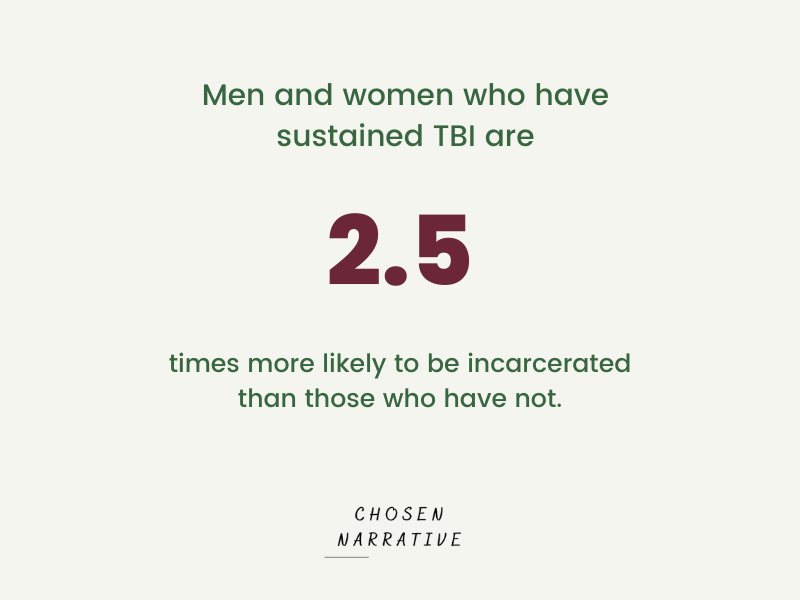
In many instances, a history of traumatic brain injuries (TBI ) comprises multiple injuries that contribute to a cumulative impact. This research has been further expanded to reveal that men and women who have sustained TBI are approximately 2.5 times more likely to be incarcerated than those who have not.
Melissa Bickford writes for The Marshall Project about brain injuries, describing them as the “criminal justice issue nobody talks about.” Through her firsthand experience of navigating the criminal justice system with a brain injury caused by domestic violence, she describes the repercussions of her trauma.
TBI impacts both victims and perpetrators, and some individuals are pushing legislation to get neuropsychological exams for people inside. By impacting one’s ability to manage emotions, brain injuries contribute to impulsive and agitated behavior. It becomes increasingly more difficult to build a healthy and productive life with untreated brain injuries.
Rehabilitation vs. Punishment
Incarceration is a consequence of action, but it still costs taxpayers money to house and feed those who have broken the law (as well as the wrongfully accused). Yet rates of criminal recidivism worldwide are reported to be as high as 50%, which begs the question — should incarceration be a form of punishment or a rehabilitation method?
Putting my personal opinions aside, the numbers show that rehabilitating offenders reduces recidivism, saves money, and makes communities safer. But more than that, rehabilitation reduces the severe mental health impact on incarcerated individuals.
In the United States, the “get tough on crime” approach has shifted the prison policy from being grounded in rehabilitation to being a severe form of punishment. The result is mass incarceration, with a higher percentage of the US population involved in the criminal justice system than in any other developed country.
Unfortunately, many incarcerated individuals have serious mental health illnesses, and need a nuanced approach to rehabilitation is needed.
Yet limited resources mean there are insufficient mental health professionals in prisons to make a meaningful difference. Basic philosophical differences between rehabilitative psychology and punishment-centric corrections also present a problem.
The dramatic reduction of inpatient mental health care has framed mental illness as a crime. Consider the following statistics from NYSBA:
- American citizens with mental illness are ten times more likely to be incarcerated than they are to be hospitalized
- More than 70% of people in American jails and prisons have a minimum of one diagnosed mental illness or substance use disorder


Incarceration can cause lasting damage to mental health by triggering and worsening symptoms of mental illness — which lingers long after someone is released from behind bars.
Sadly, the crisis is worsening, and psychologists and advocates are feverishly working to present literature that could shift the direction to a productive and effective one.
Early Intervention methods
Understanding the risks of mental health behind bars, it’s important to implement early intervention efforts to prevent further damage.
There are reputable organizations, such as The Disabilities Trust, in collaboration with Royal Holloway, University of London, which implemented a study on brain injuries in female offenders and how a support pathway can better manage the health, cognitive, and behavioral issues that impact the likelihood of reoffending.
Their findings suggested the following changes in the system:
- Including brain injury screening as a routine part of the induction assessment on entry to prison on probation services
- All prison and probation staff are to receive brain injury awareness training
- Provision of brain injury support in prisons and probation settings
- Assurance that brain injury support should be aligned with gender-informed practice
- Further research to examine the potential effect of brain injury on reoffending behavior
Similar action points are offered by Transition to Adulthood, which recommend criminal justice screening and assessment, various criminal justice responses, training for criminal justice professionals, managing young people with brain injuries in custody and probation settings, commissioning appropriate and effective services, and introducing early responses to children and young people with brain injuries.
There is a lot more opportunity for research and implementation for early intervention methods and more effective rehabilitation methods to reduce the prison population, offer necessary care for offenders, and make communities more safe.
CrimeCon is widely considered the world’s number one true crime event that connects experts in law enforcement, content creation, and advocacy to create a jam-packed weekend. Rather than sensationalize a serious topic “born out of someone’s misery,” CrimeCon focuses on psychology, victimology, and methodology.
I was lucky enough to attend CrimeCon UK 2023 in London, where I learned a wealth of knowledge and benefitted from inspirational and enlightening workshops.

While it was a tough job, I’ve narrowed my experience to the following five highlight sessions.
1. CrimeDoor
CrimeDoor discussed the use of future technologies, such as AR, VR, and AI, and their role in investigations and court proceedings today. By intersecting investigation and technology, these developments can be used to improve the efficiency and accuracy of justice processes.
2. Black Criminology Network
The BCN explored the perception of ethnic stereotypes and the aspects of true crime entertainment. Currently, the entertainment world stands the risk of the erasure of voices, and there are significant ethical considerations to keep in mind. The BCN also discussed the importance of positionality, which should be front of mind whenever telling another’s story.
3. Raphael Rowe - Second Chance
Raphael Rowe interviewed Colin Sutton, former Senior Investigating Officer in the Metropolitan Police, along the themes of his podcast, Second Chance. The pair discussed the value of getting the best out of people and how the importance of getting second chances out of incarcerated individuals impacts the community.
4. Former FBI Agent Katherine Scweit
Former FBI Special Agent Katherine Schweit is the author of Stop the Killing and How to Talk to Anyone About Guns. She presented a discussion on massing shootings in the United States, busting myths along the way. She also discussed the true problem of guns, America’s violent landscape, how to spot a shooter, and how to keep yourself safe.
5. Human trafficking and modern-day slavery
Author Louise Hulland, advocate Aisosa Henkoma, and human trafficking expert Phil Brewer joined forces to discuss the prevalence of human trafficking and modern-day slavery, with Aisosa sharing a powerful testimony of his own experience.
Discuss existing and potential governmental responses to right-wing nationalism and neo-Nazism in one or several countries. Are these punitive and preventive measures sufficient in addressing those ideologies?

The severity of the threat of right-wing terrorism has been debated in recent years, with many arguing that right-wing terrorism is rising, particularly compared to Islamic religious terrorism. Other analysts argue that the threat is overstated (Jones et al., 2020).
However, right-wing terrorism’s connection to right-wing nationalism and neo-Nazism, and the associated threat of violence, xenophobia, and political turbulence, presents a security threat to the United States and the rest of the world (Koehler, 2015).
It is essential that national governments introduce both punitive and preventive policies to address rising ideologies of hatred and violence.
I will briefly discuss the rise of right-wing nationalism and neo-Nazism in Europe (using the Pan-Nordic region as an example) and the United States of America. Next, I will compare existing governmental responses and assess the effectiveness of these measures. Finally, I will recommend additional policy efforts to consider.
Presence of right-wing nationalism and neo-Nazism
The resurgence of right-wing nationalism, a political ideology that combines right-wing politics and populist rhetoric and themes, desires to bring back power to the people and is typically antithetical to liberal democracy (Halikiopoulou, 2019).
Right-wing nationalism is typically hegemonic in its cause as a collective (Halikiopoulou, 2019), and extreme right-wing nationalism and activism are connected with neo-Nazi subcultures that exercise violence and racism (Mattsson & Johansson, 2021).
Some of these right-wing extremist groups are based within a certain region, while others are transactional in nature (and threat). By comparing extreme right-wing nationalism between Pan-Nordic countries and the United States, I hope to draw on similarities and differences between the threat.
Right-wing nationalism in Pan-Nordic countries
Much of the focus on right-wing nationalism is centered on Europe, home to several established right-wing terrorist networks. For example, Nordiska motståndsrörelsen (Nordic Resistance Movement, or NRM) is a transnational neo-Nazi organization that operates in Sweden, Denmark, Norway, and Finland. The NRM has threatened and attacked minority groups such as homosexual communities, Muslim asylum seekers, and ideological rivals (Jones et al., 2020).
Consider Denmark in the 1980s. The country experienced increased immigration which led to the emergence of a xenophobic subculture and the strong presence of the radical right. Various political and social movements have evolved the radical right into a social movement that includes nationalist associations, militant skinheads, and neo-Nazis.
While there have been lulls in popularity as rival ideologies counter the efforts of the extreme right, national and international circumstances in the past two decades have offered new opportunities for the Danish radical right — both in the streets and as a parliamentary voice (Karpantschof & Mikkelsen, 2017). Similar trends and developments have emerged in other Pan-Nordic countries.
Right-wing nationalism in the United States of America
In the United States, the Anti-Defamation League’s Center on Extremism has assembled a list of 150 right-wing terrorist acts and attempts between 1993 to 2017 (ADL report, 2022).
Unlike European examples, where right-wing nationalists are often members of organized and/or political groups, many of these attacks in the United States are seemingly executed by lone perpetrators connected to (or inspired by) an underground network with leaderless resistance (Frontline PBS, 2020). Most right-wing extremist attacks fall under two categories: white supremacists (including neo-Nazis) and anti-government extremists (ADL report, 2022).
In recent years, organized groups branded right-wing nationalists in the United States, such as the Proud Boys and the Oath Keepers, have become more prominent. As in the Pan-Nordic region, certain international and social developments have created a platform for right-wing nationalists to gain momentum. For example, the strengthening of liberal political parties and their ideologies (Pahnke, 2021) and the military response to white-power activism (Frontline PBS, 2020).
Existing governmental responses and effectiveness
Political and social expression is fundamental in right-wing nationalism and extremist movements, and governmental policies are necessary to prevent and punish threats and acts of violence.
Governmental responses in Pan-Nordic countries
The NMR is pro-violence and uncompromising, spreading its political agenda and leveraging different kinds of violence, threats, and harassment to prevent retaliation. Yet the NMR remains a legal organization (in Sweden), and NMR members swiftly confront politicians who criticize the movement (Kenes, 2021).
NMR leadership dismisses illegal activities committed by members as isolated and independent acts. In response, the government has mapped out the most active members in the NMR. A minority percentage have been convicted or prosecuted for crimes, with almost a quarter of cases leading to imprisonment. The NMR is also on the radar of the Swedish Security Police (Säpo), who have classified the NMR’s violent tendencies as the second biggest threat in Sweden (after Islamic terrorism) (Kenes, 2021).
Apart from monitoring groups and punishing violent perpetrators, the government is also implementing policies that prioritize equality and promote equal treatment of all persons without discrimination based on gender, race, or ethnic origin. For example, Denmark has established the Danish Institute for Human Rights (DIHR). In addition, the court has found discriminatory video statements by the leader of the Hard Line extreme-right party not to be protected by freedom of speech (ECRI, 2022).
Some European countries have banned right-wing extremist networks and placed sanctions on right-wing extremist groups that allow governments to freeze financial assets and criminalize group members. However, the internet and social media forums remain important platforms for right-wing extremists to spread propaganda and coordinate their actions (Jones et al., 2020).
Other efforts to strengthen democracy against extreme right-wing nationalism in Sweden include initiatives to increase election turnout to enhance democratic awareness, implement democracy-promoting initiatives in civil society, promote democracy in schools, and protect human rights by combatting discrimination, xenophobia, and other forms of intolerance. Culture is prioritized as part of the democratic system, and there are initiatives to reduce exclusion among young people and foreign-born individuals (Björklund & Ohlsson, 2011).
Governmental responses in the United States of America
In the United States of America, the comparable right-wing movement is composed of a “highly diverse and loosely connected network of individuals and groups who reject U.S. laws, taxation, currency, and the government’s legitimacy, especially regarding the control of firearms.” (Koehler, 2015).
The fluid and underground nature of these groups makes it difficult for law enforcement to detect communication and group structures before a violent event occurs. Even so, the United States has not banned any far-right organizations (Jones et al., 2020), and the focus remains on religious terrorist networks such as the Islamic State and al-Qaeda.
Although not always apparent, the early warning signs of violent right-wing actions are often ignored, as was the case with the January 06 storming of the Capitol Building, which revealed the lack of preparation for the event and the failure to translate operational intelligence into an effective preventative plan (Perliger, 2023).
Policy recommendations focus on better communication and coordination between the federal government, law enforcement, and intelligence agencies to prevent future events of a similar nature. Public education and awareness of the threat of domestic terrorism is also a priority (Perliger, 2023).
As punishment, civil lawsuits for damages by the victims of far-right violence have been an effective tool (Perliger, 2023). The Biden Administration has also introduced a new unit within the Justice Department that consists of a team of attorneys dedicated to investigating domestic terrorism and tightening the focus on U.S. national security within the borders (Bergengruen & Hennigan, 2022).
Effectiveness of governmental responses
While these preventive and punitive measures acknowledge the threat of extreme right-wing nationalism and neo-Nazi movements, the threat remains understated and debated.
Both the loose and fluid nature of these networks in the United States of America (as well as the country’s strong policy on free speech) and the political authority of these organizations in Pan-Nordic countries suggest that greater effort is needed to focus on preventing the threat of violence.
By studying the United States and the Pan-Nordic region as two Western regions with differing politics and cultures, it is apparent that nuanced efforts are needed to address the cause of right-wing nationalism and the triggers that inspire growth in each region. Some of these efforts will overlap, while others are more specific to the political and social climate.
Potential governmental responses
Mattsson and Johansson (2020) report on the role school and teachers play in handling racism in schools to prevent the growth of the neo-Nazi movement in Sweden. Results show that attempts to isolate troubled students lead to resistance and stigmatization, which fuel the radicalization process. To prevent this from happening, schools and their staff should be educated on the difference between promoting an anti-racist agenda and satisfying the cognitive and emotional needs of racist students.
A long-term approach is recommended by Perliger, who suggests the development of socialization and behavioral processes can prevent political polarization in the United States (2023). A push for developing mechanisms and solutions that address the spreading of hate speech, misinformation, and extremist rhetoric in online spheres should also be a key focus (Perliger, 2023).
In both regions, public education on immigration and its implications are crucial for improving tolerance for migrant communities. Reeskens & van Oorschot suggest that public opinion toward migrants originates from “aspirations about citizenship, as well as perceptions about its realization” (2017). Policymakers should be concerned about the impact of misinformation and how it correlates with immigration policies to nurture a public opinion of tolerance.
Finally, the origins of violence should be considered and intercepted. Mattsson and Johansson study how violence is reproduced and how a violent upbringing and a violent environment during childhood create ideal conditions for a violent neo-Nazi lifestyle (2021). Effective prevention strategies are essential to promote awareness about child mistreatment and to foster a commitment to social change, especially for at-risk children in schools.
References
- ADL Report. (2022). A Dark and Constant Rage: 25 Years of Right-Wing Terrorism in the United States. Accessed on May 20, 2023, from https://www.adl.org/sites/default/files/CR_5154_25YRS%20RightWing%20Terrorism_V5.pdf
- Bergengruen, V. & Hennigan, W. (January 24, 2022). Prosecuting Domestic Terrorism is Notoriously Difficult. This New Team of Lawyers Has a Mounting Caseload. TIME. Accessed on May 20, 2023, from https://time.com/6140308/domestic-terrorism-justice-department-unit-joe-biden/
- Björklund, J. & Ohlsson, B. (2011). Action plan to safeguard democracy against violence-promoting extremism. Government Offices of Sweden. Accessed on May 20, 2023, from https://www.government.se/contentassets/b94f163a3c5941aebaeb78174ea27a29/action-plan-to-safeguard-democracy-against-violence-promoting-extremism-sr.-20111244 ECRI. (2022).
- ECRI Report on Denmark (sixth monitoring cycle). Council of Europe. Accessed on May 20, 2023, from https://rm.coe.int/6th-ecri-report-on-denmark-/1680a6d5e4
- Frontline PBS | Official. (November 03, 2020). Documenting Hate: New American Nazis (full documentary) | Frontline. [Video]. YouTube https://youtu.be/-XFBVAAzXjc
- Halikiopoulou, D. (2019) Right-wing populism as a nationalist vision of legitimating collective choice: a supply-side perspective. The International Spectator, 54 (2). pp. 35-49. ISSN 0393-2729 doi: https://doi.org/10.1080/03932729.2019.1588544
- Jones, S., G., Doxsee, C., and Harrington, N. (March 2020). The right-wing terrorism threat in Europe. A report of the CSIS Transnational Threats Project. Center for Strategies and International Studies.
- Karpantschof, R., & Mikkelsen. F. (2017). The rise and transformation of the radical right movement in Denmark 1980–2015. Studies in Conflict & Terrorism 40, 8, 712-730.
- Kenes, B. (April 2020). NMR: A Nordic neo-Nazi organization with aims of establishing totalitarian rule across Scandinavia. ECPS. Accessed on May 20, 2023, from https://www.populismstudies.org/wp-content/uploads/2021/05/ECPS-Organisational-Profile-Series-4.pdf
- Koehler, D. (2015). Right-wing extremism and terrorism in Europe. Current developments and issues for the future. Prism 6, 2, 85-104.
- Mattsson, Ch. & Johansson, Th. (2020) The hateful other neo-Nazis in school and teachers strategies for handling racism, British Journal of Sociology of Education 41, 8,1149-1163,
- Mattsson, Ch., & Johansson, Th. (2021). “We are the White Aryan Warriors”: Violence, homosociality, the construction of masculinity in the National Socialist Movement in Sweden. Men and Masculinities 24, 3, 393-410.
- Pahnke, A. (March 31, 2021). How the far right got a stranglehold on the West. Aljazeera. Accessed on May 20, 2023, from https://www.aljazeera.com/features/2021/3/31/how-the-far-right-got-a-stranglehold-on-the-west
- Perliger, A. (January 02, 2023). Contextualizing the Jan 6th Report: Contemporary Trends in Far-Right Violence in the US. ICCT. Accessed on May 20, 2023, from https://www.icct.nl/publication/contextualising-jan-6th-report-contemporary-trends-far-right-violence-us
- Reeskens, T., & Van Oorschot, W. (2017). Conceptions of Citizenship and Tolerance towards Immigrants. In Oxford University Press eBooks (pp. 177–198). https://doi.org/10.1093/acprof:oso/9780198795452.003.0007