What is the connection between the public and the criminal justice system? In many ways, individuals who partake in criminal behavior are outcasts from the general. Yet, no matter how we box these individuals or push them far back in our review mirror, the public and the criminal justice system overlap significantly.

Consider that:
- Public views shape policies and laws that guide criminal justice processes. As well as the acceptance of formerly incarcerated people who reenter society after serving time.
- The jury system directly implicates the sentencing of specific individuals placed on trial, holding their future (and the future of their loved ones) in their hands.
- Tax money is used to fund criminal justice systems — from police salaries and governmental departments charged with protecting public safety to corrections expenditures and court expenditures.
These are three simple, everyday ways the public connects with the criminal justice system.
The Disconnect Between the Public and the Criminal Justice System
Various narratives about the criminal justice system are circulating in the public realm, from police giving up on all but the most serious crimes to prisons being beyond capacity.
While these stories largely hold truth and can be applied around the world, there is a big lesson that can be learned from public policy failure and the impact that it has on the community’s trust in the criminal justice system.
Prejudice and judgement
The disconnect is more apparent when comparing certain communities, bringing racial and ethnic tension to the forefront. For example, a 2015 Washington Post shared that “Black teens who commit a few crimes go to jail as often as white teens who commit dozens.”
Similar disconnect parallels can be drawn between disabled people, including those with learning disabilities, brain injuries, and mental health conditions.
By isolating those “prone” to criminal behavior, it’s easier for opposing groups within the community to isolate themselves from the system and harbor judgemental attitudes.
The Prosecutor
I've recently finished reading The Prosecutor, an autobiography by Nazir Afzal, a British solicitor and former prosecutor within the Crown Prosecution Services. Nazir presents a very interesting approach to managing crime, and it all comes back to connecting with the community.
I highly recommend reading Nazir Afzal’s book to gain insight into the challenges and processes faced by players in the criminal justice system — and how the civilian community plays a larger role than anticipated.
Balancing second chances and public safety
Daily Press recently shared a story about Democrats and Republicans bumping heads on significant criminal justice reforms, namely a rehabilitation and reentry bill package. A main component of the proposed package is the “second look” bill, which allows sentencing hearings 10 years into an inmate’s term, regardless of the crime.
As the author writes, “The goal of the proposed legislation is laudable. But its potential impact on public safety is so great it should not be rammed through on a one-party vote without debate.”
While the article is United States-focused, the lesson of political collaboration is a universal one. As the column states, “The ultimate goal should be to create a corrections system that actually corrects behavior while protecting the public from harm.”

Social reintegration and public safety
UNODC has published an introductory handbook on the prevention of recidivism and the social reintegration of offenders, where they distinguish the link between social reintegration and public safety. The handbook highlights the social and economic costs of failed reintegration as a major concern for policymakers, especially in low- and middle-income countries. However, it’s important to remember the necessity of reintegration programs for public safety and the socioeconomic development of countries.
So, how does the public feel about reentry? A recent report reveals that public members appear open and supportive of utilizing “second chance” mechanisms in various contexts, especially among offenders serving long-term prison sentences. While levels of support vary by race, gender, and age, it seems the cost of incarceration to taxpayers is a significant motivation for using second-chance mechanisms. As the paper says, “The USA’s current reliance on long-term prison sentences mounts incredible human and monetary costs that are disproportionate to their effects on crime rates and public safety.”
There are alternatives to long-term prison sentences that balance public safety and the proper reintegration of offenders. The Commission of Effective Criminal Sanctions has presented a few key areas to consider.
- Non-incarceration community solutions that prevent the creation of a conviction record for less serious offenders
- Enhanced parole and probation oversight
- Granting occupational licenses to individuals with past convictions
- Revise access to and use of criminal background data for non-law enforcement purposes
- Legal assistance concerning secondary repercussions
- Training in the exercise of discretion
How can the public community help with reintegration
Reintegration of former offenders demands the community's assistance to succeed. By taking local ownership of the reintegration process, it can benefit both returnees and the community. These community-based reintegration projects range from collective returnees and new community-based projects to including returnees in existing community-based projects.
Community-level initiatives
Community-level initiatives should focus on short- and medium-term barriers to reintegration, foster dialogue and social cohesion, support the resilience of returnees, and support the longer-term sustainability of intervention outcomes.
When the community collectively works to combat stigmatization, it empowers former offenders to build meaningful connections and strengthen their social networks.
Community leaders
Community leaders, in particular, play a significant role in the reintegration of ex-prisoners. Depending on the country, these community leaders may include traditional and religious leaders as well as local civil society organizations. By nurturing strong ties to the community, these community leaders play a role in mediating between former offenders and the community.
General public
While criminal justice lands squarely in the laps of the authorities, the public can still play a valuable role in encouraging reintegration and improving the results of criminal justice efforts.
Consider the following steps as a starting point:
- Engage with law enforcement by volunteering, offering constructive feedback on local authorities, participating in law enforcement surveys, and staying updated with local police departments on social media.
- Participate in neighborhood watch and attend community meetings.
- Provide informal social control and services that reduce the likelihood of juvenile criminal behavior.
- Cooperate with fellow community members to create a safe space for vulnerable individuals.

Are there any other ways that the community can positively contribute to criminal justice and reform?
As technology has evolved, it has introduced several opportunities for businesses and organizations to grow and expand. There are also opportunities in the criminal justice space, but how many of these remain unexplored?

The Importance of Digital Literacy
Some private companies recognize these opportunities and put their money where their mouth is — such as Google, which launched Grow with Google Career Readiness for Reentry. The program is focused on job readiness and digital skills training for formerly incarcerated individuals. Google announced over $8 million in investments in organizations helping “justice-impacted” individuals. Google has a goal of helping 100,000 formerly incarcerated people build career skills by 2025.
Another concern is how many formerly incarcerated individuals struggle with the knowledge gap and lack of digital skills, as access to digital development behind bars is limited.
For example, one study that identifies tech challenges of women transitioning from incarceration struggles with basic digital skills, such as knowing how to protect privacy or online information.
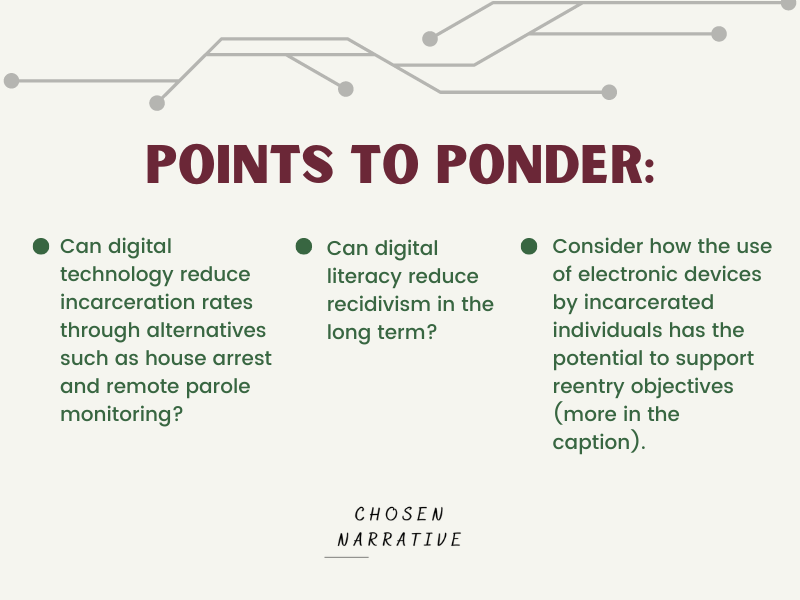
Additional studies show that digital literacy can reduce recidivism in the long term, as well as digital technology reducing incarceration rates through alternatives such as house arrest and remote parole monitoring. For example, GPS and radio frequency-enabled technology provide an alternative to physical incarceration (reducing incarceration costs and easing the reentry of nonviolent offenders).
Supporting Prisoner Reentry
Rand Corporation has produced a report that explores leveraging technology to support prisoner reentry, as well as the challenges that correctional agencies face — and how to overcome them.
Consider how the use of electronic devices by incarcerated individuals has the potential to support reentry objectives.
- Better prepare for future job opportunities
- Leverage communication tools to deliver reentry-related services remotely
- VR and other simulation technology can be an effective tool to support reentry
- Used in correctional education
- Facilitate support for incarcerated individuals and their families
How Can Technology Assist With Reentry?
Did you know that implementing a digital application process for incarcerated individuals can save an officer approximately 91 hours a week?
Setting aside the fact that the prison system seldom offers the necessary resources for proper rehabilitation, many incarcerated individuals struggle to adjust to life outside of prison after release. Could technology better facilitate a smooth transition? And how?
Rand Corporation researched the use of electronic devices to support reentry objectives, and they produced a few key findings.
- Technology can better prepare individuals for future job opportunities
- Technology provides the opportunity to leverage communication tools to deliver reentry-related services remotely
- Virtual reality can be effective in supporting reentry
- Technology plays a key role in correctional education
- Technology can facilitate support for incarcerated individuals and the families awaiting their return
- Telepresence technology can facilitate warm hand-offs to community-based partners
Of course, correctional agencies face several challenges in implementing technology for these purposes, and the recommendations provided by the study only work in theory — until they are executed practically.
Reform Think Tank further explores the potential of innovation across the prison estate. They discuss how secure technology can be used by prisoners to improve outcomes in custody, plan for resettlement, and enable continuous support for the community.
These plans involve all parties in the criminal justice system and rely on trusting secure systems with those behind bars. Training and induction processes are necessary, and with the right guidance, the potential for technology in reentry is significant.
Evaluation of Digital Technology in Prisons
Technology and data offer unique insights that help to refine policy, guide decisions, and implement meaningful change. Unfortunately, the criminal justice system is perforated by data gaps.
Justice Lab describes lack of data as “areas where a lack of published data makes it hard to answer questions of significant public interest” and includes areas of police, courts, and prison. Data gaps are a global concern, but improvement is possible. Shifting attention to the use of digital technology in prison, research reveals an opportunity to leverage the digital era for positive change.
The Ministry of Justice released a report on evaluating digital technology in prison to reveal various aims. While the study was conducted in the United Kingdom, the approach could be applied to a wider global community with the proper allocation of resources and security.
- Provide opportunities for incarcerated individuals to build skills and assist in their rehabilitation
- Reduce prison violence by improving relationships between incarcerated individuals and staff
- Improve relationships between incarcerated individuals and people outside of prison
- Increase staff job satisfaction
The study goes in-depth, discussing the role of technology on themes of functionality and access, uptake and use of technology, interactions and relationships, staff and prisoner wellbeing, and staff workload.
I was particularly drawn to the insights on prisoner and staff wellbeing, where the introduction of digital technology improved the psychological well-being of prisoners, increased feelings of personal responsibility, and less friction.
Of course, this report only scratches the surface of how technology can benefit prisoner rehabilitation, staff well-being, and the general improvement of criminal justice results.
It’s possible that these digital tools can fill gaps where limited staff and financial resources cannot. These digital tools may also contribute to more data, which further serves the public interest and improves criminal justice efforts.
Enhancing Rehabilitation Outcomes Through Innovative Technology
Innovative technologies provide an opportunity for change, including criminal justice reform. Recently, the United Nations Interregional Crime and Justice Research Institute hosted a session on enhancing rehabilitation outcomes for prisoners through the adoption of innovative technologies.
The summit discussed how innovative technology offers a promising solution to rehabilitation by providing access to rehabilitation programs and flexible, effective prison-based interventions. This discussion is in conjunction with the attention on the importance of digital literacy skills and the critical role they play after release.
The Prisons Strategy White Paper also pushes the agenda for a modern, innovative approach to jails that intends to reform prisoners while protecting the public — a bold goal that can be achieved through applied thinking and allocation of resources.
Some of these measures include:
- Using body scanners to achieve a zero-tolerance approach to drugs
- Assessing offenders for drug and alcohol addiction and putting together a comprehensive addiction plan
- Improved education, with a focus on digital literacy and training offenders in vocational skills such as construction and coding
- Introducing a job-matching service that pairs offenders with vacancies in the community to reduce unemployment post-release
- Resettlement passports offer incarcerated individuals all that they need to start looking for work after release
- Speedier punishment schemes with penalties linked directly to their offense (while supporting rehabilitation)
In November 2021, the UK government allocated an extra £550 million to reduce reoffending and £3.75 billion to create 20,000 extra prison places across the estate.
What are your thoughts on this approach?

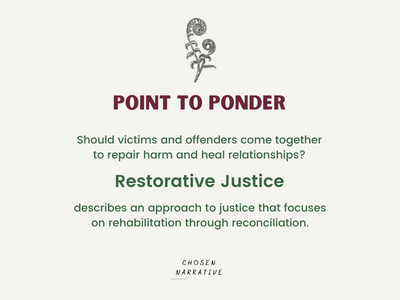
Restorative justice describes an approach to justice that strives to repair the harm caused by criminal activity. It allows different types of victims and perpetrators to communicate and address their needs in the aftermath of a crime.
Goals of Restorative Justice
If a case goes to court, Restorative Justice happens post-conviction and can occur while the perpetrator serves time in prison.
Restorative justice strives to achieve the following goals:
- Create a space for open communication between victims, offenders, and communities
- Encourage meaningful engagement and accountability
- Provide an opportunity for healing, reparation, and reintegration
- Reduce recidivism
- Produce greater satisfaction for victims
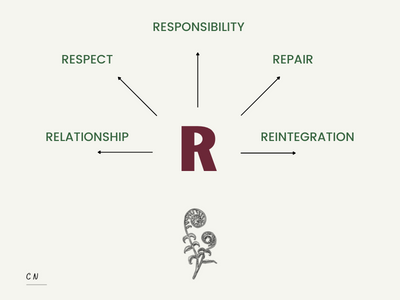
The essence of restorative justice can be summarized with these five principles:
- Relationship - strive to fix a damaged relationship
- Respect - respect is key to making relationships work
- Responsibility - everyone must take personal responsibility for their actions
- Repair - once respect and responsibility have been established, the element of repair slowly replaces thoughts of revenge and/or punishment
- Reintegration - encourages collaboration with the community and recognizes the benefits a person can bring to the table
Restorative justice is based on principles of respect, compassion, and inclusivity. It uses processes to achieve its goals, such as conferences and dialogues guided by skilled facilitators.
Restorative justice is a holistic approach to justice that addresses the needs of victims, including their material, financial, emotional, and social needs.
Does Restorative Justice Work?
The concept of restorative justice may sound productive, but the politics of restorative justice needs to be applied correctly (and carefully).
There are a few promising findings but little scientific evidence to prove that restorative justice works.
The majority of the programs have been implicated for juvenile offenders. While the results are mixed, there is good evidence that programs focused on minors contribute to reducing recidivism.
For example, one study revealed that 91% of victim participants participating in a restorative justice program in California were willing to participate in another conference. The same percentage would recommend the process to a friend.
In Winnipeg, an evaluation of a restorative justice program revealed that participating offenders had lower recidivism rates (15%) than the matched group of probationers (38%).


Communities for Restorative Justice have revealed more insights, showing that restorative justice programs have a more positive impact than traditional criminal justice.

There’s no denying that restorative justice is a heavy process that demands an open mind from both victims and offenders. There are instances when the program falls flat and others where major breakthroughs are achieved (for both parties).
Real-Life Examples of Restorative Justice
Statistics are useful in driving policy and systemic change, but it’s real-life human stories that change hearts.
Impacting the lives of (former) offenders
Restorative Justice Exchange is an initiative of the Prison Fellowship International which is committed to strengthening restorative practices in programs for prisoners, victims, and families of prisoners.
First, restorative justice changes the hearts and minds of those who have caused pain and anguish, inspiring them to change their lives for the better. One person involved in The Sycamore Tree program says the following.
Jose Fonseca, a former gangster in Columbia, served time for shooting a rival gang member. After serving time, he returned to the same neighborhoods to share his testimony and set an example for the youth. Restorative justice taught him about the ripple effect of his crimes — and he couldn’t shake the realization. He has even found peace with his victims.
Impacting the lives of victims
But it’s not only the former offenders that benefit from restorative justice. Consider Rob’s story, which has been shared by Why Me?
His son was robbed and attacked by three youths. One of the attackers was convicted to six months behind bars, and Rob was offered the opportunity for a restorative justice meeting. A year after the attack, the meeting took place, and Rob recalls his experience.
“After the attack, my son was clearly shaken and upset. I on the other hand was left with anger and no direction in which to channel it. I attended court but the process allowed no voice for the victim. Taking part in the Restorative Justice meeting was a chance to open up a conversation, in which both my son’s attacker and I could both listen and equally be heard. I anticipated that he would not answer the majority of my questions but he did listen to what I had to say about his senseless choice of actions on the evening he attacked my son.
I was also able to understand the young person’s background. Whilst not excusing his behavior that night, I did find myself having a certain amount of empathy and consideration for his circumstances which I was not expecting. At the end of the meeting I looked him in the eye, shook his hand and wished him all the best in his future. I hoped that with the benefit of him taking part in Restorative Justice from an offender’s perspective, he would think carefully about his future choices.
When I left the meeting, it felt like a weight had been lifted from me that I didn’t even realize I was carrying. I felt like my anger from the time of the attack had subsided but what I had unwittingly done was suppress it. Now finally after this meeting all the unwanted negativity I had held was finally and permanently gone.”
If we want to reduce the recidivism rate, then we need to focus on rehabilitation methods that actually lead to change. Yet around the world, correctional services struggle to balance resources with the need to provide effective rehabilitation — so it’s important to use these resources wisely.

Education
Education is a fundamental component of rehabilitation, serving as a catalyst for behavioral change. Prison Policy research shows that formerly incarcerated people are nearly twice as likely to have no high school credential and formerly incarcerated people are 8 times less likely to complete college than the general public.
The value of education
Education behind bars can close the gap in educational opportunities.
At a base level, education increases an individual’s awareness, improves cognitive function, and reduces anti-social attitudes that are commonly associated with criminal behavior.
Education serves as a gateway to social and economic opportunities, providing formerly incarcerated individuals with a crutch to adjust to life after prison. It also increases self-confidence and boosts self-esteem. Yet education behind bars doesn’t only benefit the incarcerated individual.
a cost-effective solution
Prison education is a cost-effective investment that has a life-changing impact on those who enroll.
These results have been explored by various studies, including the Department of Policy Study at UCLA which found that “a $1 million investment in incarceration will prevent about 350 crimes, while that same investment in [prison] education will prevent more than 600 crimes. [Prison] education is almost twice as cost effective as incarceration.”
Adding to this context, every $1 that is invested in prison education saves taxpayers $4 to $5 in recividism costs during the first three years of release. As governments struggle with funds to provide effective rehabilitation efforts, private organizations have got involved.

Cognitive Behavioral Therapy (CBT)
There’s a growing awareness and understanding of mental health. With the recent pandemic, the focus on self care has been further boosted, and the light has been shone on anxiety, loneliness, and depression. As such, cognitive behavioral therapy (CBT) has become increasingly popular, being branded as “gold-standard psychological treatment.”
At least, this is the case outside of prison walls.

using CBT techniques
CBT is a psychological treatment based on the understanding that thoughts, feelings, physical sensations, and actions are interconnected.
Negative thoughts and feelings lead to a vicious cycle of negative behavior. Using CBT techniques such as cognitive restructuring and journaling helps break this cycle of negative behavior. CBT is used to help crime victims deal with trauma and can also be used in criminal rehabilitation processes.
CBT Behind Bars
Tests have been conducted around the world, using CBT as a therapy within the criminal justice system.
One study in Nigeria revealed that CBT helped reduce the psychological distress among incarcerated individuals awaiting trial.
Other studies show CBT helps improve social skills, develop critical and moral reasoning, practice impulse management, and ultimately reduce recidivism rates.
Dr. Jose Francisco Suarez Roa writes, “Cognitive Behavioral Therapy (CBT) for offenders targets ‘criminal thinking’ as a factor which contributes towards criminal behavior. By assuming that this ‘criminal thinking’ is a cognitive deficit which has been learned, CBT focuses on teaching offenders to understand the thinking processes and choices that precede criminal behavior.”
CBT holds a lot of potential for reducing recidivism and even preventing crime in the first place. Techniques are easy to practice and cost-effective, and particularly useful when dealing with individuals struggling with depression, anxiety, disorders, alcohol and drug use, and mental illness.
employment training
A principle of the UNODC’s Nelson Mandela Rules stipulates that "All prisoners shall be treated with the respect due to their inherent dignity and value as human beings."
Unfortunately, this mindset is not reflected in the employment world post-incarceration. Some criminal convictions instantly disqualify people from certain job opportunities, while other opportunities are shrouded in bias and concern over a large gap in a resume.
Criminal convictions and job opportunities
Some criminal convictions instantly disqualify people from certain job opportunities, while other opportunities are shrouded in bias and concern over a large gap in a resume.
Considering the link between poverty and crime, disadvantaged communities are most at risk of incarceration. For example, prior research reveals that 69% of incarcerated people have no high school diploma and struggled to find employment.
Helping previously incarcerated people find and keep employment is one of three key elements of reentry identified by the Department of Justice, benefitting both the community and the individual.

Preparation for employment
Preparing incarcerated individuals for future employment is key to reducing recidivism and retaining employment.
The benefits are expansive, including refining soft skills, improving cognitive ability, and providing industry-recognized training and certifications that empower individuals in the working world.
Second-chance hiring is growing in popularity and effectiveness, helping industries suffering from labor shortages. Studies reveal that 85% of HR leaders believe that second chance hires perform the same or better than other employees, and 81% of business leaders echo this sentiment.

Preparing incarcerated individuals for employment while behind bars as a step in rehabilitation is the first move to helping them find and retain employment once released.
drug rehabilitation and mental health
Did you know that 85% of the prison population has an active substance use disorder or were incarcerated for a crime involving drugs or drug use?

Research shows that 80% of crimes that lead to incarceration involve drugs or alcohol. Without proper rehabilitation, 95% of incarcerated addicts will return to substance abuse and trigger future criminal activity, including use-related, economic-related, and system-related crimes.
While the hope is that incarcerated people will become stronger individuals after their sentence, inmates with opioid use disorder are at a higher risk for overdose after their release.

Substance abuse programs and mental health treatment
Substance abuse programs and mental health treatment are key aspects to include in the rehabilitation process, ensuring that incarcerated individuals get the help they need and address the root of the problem.
Addiction changes behavior and contributes to criminal behavior. So, addiction must be treated as a treatable disease.
treatment programs
Substance abuse treatment programs that have been implemented reduce recidivism, overcrowding, and substance abuse behind bars.
While the initial cost of introducing treatment in the criminal justice system prevents implementation, money is saved in the long run — along with lives and money.
We argue that second chances are integral to the global community, playing a critical role in helping incarcerated individuals reform their behaviour and successfully reintegrate into society.
Second chances don’t only help with a smooth reentry but can also provide the opportunity to receive proper treatment for mental health disorders or assist individuals reaching potential through education (even if it is behind bars).
Second chances in the criminal justice system
In the criminal justice system, second chances are layered.
- The system needs to have mechanisms in place to offer offending individuals the chance to change their ways
- Incarcerated individuals need to give themselves a second chance
- Victims of crime offer forgiveness as a contribution to restorative justice
Second chances play an important part in restorative justice, where victims of crime release feelings of anger, resentment, and bitterness. It also helps to unblock the barriers of guilt.
Do these words echo true for you?
We argue that second chances are integral to the global community, playing a critical role in helping incarcerated individuals reform their behaviour and successfully reintegrate into society.
Second chances don’t only help with a smooth reentry but can also provide the opportunity to receive proper treatment for mental health disorders or assist individuals reaching potential through education (even if it is behind bars).
Seocond Chances in Restorative Justice
Research from Psychology Today reveals four powerful reasons to extend forgiveness to others and yourself.
- Forgiveness is important for subjective well-being as it offers emotional benefits, reducing anxiety, depression and major psychiatric disorders
- Personality isn’t set in stone, and second chances provide space for a person to change, grow, and learn from their mistakes
- Second chances are practical in conflict resolution and assist in preserving emotional energy
- Forgiveness is founded on the principle of treating others as you want to be treated
Point to ponder:
How have second chances played a positive role in your life? Now imagine the opportunity in a life-changing circumstance.
One of the biggest challenges that formerly incarcerated people face is finding employment. Not only do many employers refuse to hire people with a criminal record, but people often leave prison without the education and basic skills needed to maintain employment.
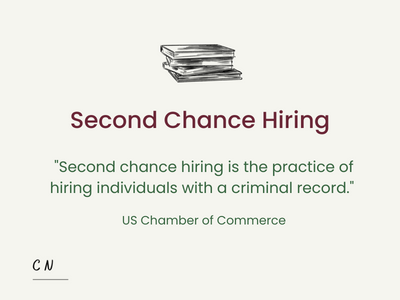
That’s where businesses like Nehemiah Manufacturing come in, offering formerly incarcerated individuals a chance at reentry without judgment. Their story has been shared by Stand Together.
Nehemiah Manufacturing
At Nehemiah Manufacturing, 80% of employees are second chances hires, providing a place for formerly incarcerated people to earn a living and contribute to the economy while being treated with dignity and respect for who they are today and not what they did in the past.
Second chance hiring also plays a role in meeting worker shortages. In the instance of the manufacturing industry, the United States is expected to have 2.1 million manufacturing jobs unfilled by 2030, contributing to a $1 trillion loss in gross domestic product.
The Manufacturing Institute is countering this problem by creating programs for second chance hiring, and businesses have responded by embracing the opportunity to recruit and retain second chance hires.
The Value of Second-Chance Hiring
Businesses and communities are being strengthened through these programs. For example, turnover rates are lower among second-chance hires, helping businesses save money on hiring and training.
The vast majority of HR professionals (85%) and business leaders (81%) also report that second-chance hires perform the same or even better than employees without a criminal record.

As the workplace culture shifts to be more inclusive, second chance hiring is proving valuable for both individuals and businesses, strengthening the economy and stabilising communities.
Did you know that children (under the age of 18) can receive life sentences in 73 countries, including the United States?
Even more tragic than juveniles being incarcerated without adequate rehabilitation is that most countries fail to keep accurate records of the number of children who are incarcerated for breaking the law, resulting in a lack of accountability.
As a guideline, United Nations Children’s Fund, UNICEF, has estimated that more than one million children are behind bars worldwide. Considering that many of these children (who grow into adults) endure harsh and demeaning conditions and are deprived of education, the possibility of recidivism is high.


We recently shared how exoneree Patrick Pursley has invested time and energy into reaching at-risk youth — but what obstacles does he have to tackle?
Individual Risk Factors
The first major risk is the individual self, including both controllable factors as well as intrinsic.
Consider the following;
- Involvement in general offences and substance abuse before the age of 12
- Experimentation with drugs, alcohol, and/or tobacco
- Males tend to be more likely to be violent and aggressive than females
- Psychological conditions, including behavioural and mental health struggles
- Genetic conditions and birth complications that affect the brain and nervous system
In many instances, these risk factors appear small on their own but are compounded when combined with one another and external factors such as family and community.
Family Risk Factors
Family risk factors introduce the age-old argument of nature vs nurture, playing a role on both sides. On the one hand, natural genetics are passed down from parent to child, and on the other hand, a child's upbringing contributes to their nurtured development.
Studies reveal that parents represent an environmental risk factor rather than a genetic one, suggesting that children learn violent and antisocial behaviour by observing their parents.
Discipline
Discipline (or the lack thereof) remains a pertinent factor to consider when studying the violent tendencies of a child. While children need consistent, reasonable discipline, abusive discipline can shift the boundaries of acceptable treatment toward others.
Broken home
Parental separation and divorce, as well as single-parent homes, continue to present a significant obstacle. The stress and pressure of these changes, as well as the lack of support and supervision, can impact the stability of the home structure and lead to violent behaviour.
Antisocial behaviour
Parents who lack interpersonal skills and personal efficacy can fail to develop their child’s social competence. As a result, children can develop a bitter and resentful attitude. Parents that demonstrate a disregard for right and wrong, persistent lying and disrespectful attitudes can establish an ill-guided understanding of what is normal. In the process, these standards can encourage or make excuses for criminal behaviour.
Community Risk Factors
The peer environment and surrounding community are two of the most discussed risk factors for juvenile delinquency. It’s also the area with the most potential for intervention.
Some examples of community risk factors include;
- Peer group - aggression among friends can be contagious
- Lack of education opportunities
- Socially disorganised communities
- Communities with high crime rates, gang activity and drug use
Research shows that juvenile arrest rates are higher among impoverished youth, and the general trend reveals family violence and gang activity accompany impoverished communities.
Consider the stories told in Warren’s Unorthodox project focused on gang activity and rehabilitation in South Africa as an example of gang culture influence.
Tragically, these risk factors create a dangerous cycle of crime and hopelessness. What starts as the decision to vandalise, commit petty theft or join a gang has severe knock-on effects. It robs juveniles of education and replaces admirable role models with dangerous icons.

Juvenile Detention vs. Adult Detention
Actions have consequences, and sometimes being in the wrong place at the wrong time also has consequences. Prisons, sometimes called correctional facilities for PR purposes, should work to amend criminal behaviour, upskill offenders and address mental health concerns.
So, what happens when a minor is sent to juvenile detention after their behaviour is shaped by individual, family and community risks?
First, it’s important to acknowledge that not all minors are treated as such. According to the Juvenile Law Center, thousands of children are locked up in adult prisons and jails. In some instances, incarcerated youth are exposed to strip searches, solitary confinement and abusive practices, which add to emotional trauma and disrupt healthy development.
In theory, juvenile incarceration fundamentally differs from adult incarceration by placing more emphasis on rehabilitation - as opposed to punishment for adult offenders.
By separating juvenile offenders from adults, the hope is that they will have a second chance at successful social integration. Juvenile facilities usually have very tight schedules, incorporate education and provide access to more programs.
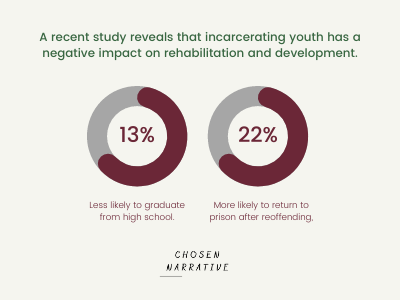
Sadly, the reality is often very different. A new study by economists reveals that existing juvenile incarceration increases the odds of recidivism and reduces the possibility of the individual graduating from high school.
The study compared two groups of kids in Chicago. One group received detention for a criminal act, while others did not (for similar crimes). Ultimately, the incarcerated youths were 13% less likely to graduate from high school and 22% more likely to return to prison.
The Solution to Juvenile Detention
Existing youth prisons are not only failing juvenile offenders but also costing taxpayers a lot of money to conduct a fruitless mission. For example, it costs approximately $142,000 per year to incarcerate one young person each year in Virginia, and the recidivism rate is 75%.
In contrast, Youth Advocate Programs offer services in the home and community settings and only cost $27,000 a year. Many of these programs incorporate restorative justice principles that strive to repair harm to victims and encourage youth to give back to their communities.
Various research studies have shown positive reform from the following efforts.
- Establishing a system of care that is focused on meeting the mental health and related needs of youth, such as community-based services and supports.
- Multi-system integration methods to help children in the child welfare, behavioural health and/or juvenile justice systems
- Introducing family-focused alternatives to court intervention
- Establishing new juvenile defence standards for legal teams
- Imposing structure through state-subsidized extracurricular activities that teach valuable life lessons
- Engaging minority groups to better understand lifestyles and decision-making
- Incorporating more rehabilitation efforts as a consequence of criminal behaviour
- Adopting a personalised approach to individual cases
- Limit children from being housed in the same facility as adult offenders
The numbers don’t lie. Youth prisons don’t work.
Additional sources:
Actions have consequences. In the same way that working hard can lead to a promotion, so can criminal behaviour lead to incarceration. To continue the analogy, receiving a promotion should inspire an employee to step it up a level, and incarceration should lead to reform and rehabilitation.
Sadly, this isn’t always the case.

True impact of long-term incarceration
There is a lot of research on the true impact of long-term incarceration on offending individuals, especially those who are sentenced under the age of 25 years old.


During the early stages of incarceration, individuals experience confinement as the biggest challenge. As the sentence progresses, a different trauma emerges, leading to the severe reconsideration of self-identity and worsening of mental health.
During this time, it’s essential that an effective rehabilitation guides thoughts on future identity. Instead, studies show that anxiety and post-traumatic stress disorder are common in those who have lived in prison for a long time. These symptoms can prevent successful reintegration upon release.
Impact on mental health
While there is routine and structure in prison, the hostile environment can impact individuals in a dramatic way. For example,
- Overcrowding and punitiveness decrease privacy reduces access to amenities and limit opportunities for programmes
- Solitary confinement increases the likelihood of developing psychiatric disorders
- Experiencing and witnessing violence leads to aggressive and antisocial behavioural tendencies and emotional distress
The longer the prison sentence, the more exposure to this hostile environment and the larger the collateral consequence. Research reveals that these triggers can worsen symptoms of mental illness and have long-lasting effects once an individual is released.

The Sentencing Project argues that “a key issue in assessing the decarceration trend is American sentencing policy and practice related to the length of prison terms.”
One could argue that this principle could apply around the world.
are long-term prison sentences a solution?
Did you know that 32% of US adults say that incarcerated individuals spend too little time in prison?
Long prison sentences may seem like a solution to managing crime, yet mass incarceration has a devastating impact on the prison population. Overcrowding, limited opportunities, lack of resources and diminishing returns for public safety are all negative side effects of long-term prison sentences. Long sentences are also counterproductive for public safety, and time served can be reduced without putting dangerous individuals back on the street.


Growing prison population
While the use of long-term prison sentences is an anomaly in the United States, with one out of seven individuals serving life sentences, the trend is prevalent around the world In South Africa, the prison population has grown by 60% between 1995 and 2004.
Other countries with high incarceration rates include Russia, Turkmenistan, Thailand and Brazil. These countries use mass incarceration to control crime rates, but the temporary solution has led to overcrowding, limited resources and damaged mental health.

In comparison, Norway, which has one of the lowest recidivism rates in the world, abolished life sentences in 1981. In Denmark and Sweden, lifers have the opportunity to be released after 12 and 18 years, respectively. Moving across to Latin America, only six of the 19 nations support life imprisonment.
Of course, specific crimes need to be considered as well as the offender's degree of responsibility and motivation for the crime. By assessing individual cases and focusing on rehabilitation, powerful and positive stories can emerge.

the role of eduation
Prison can be a dark and dangerous place, but it can also lead to powerful stories of transformation and opportunity. When effort is made to educate and rehabilitate incarcerated individuals, it can change their lives, as well as the lives of those in their community.

A study by Emry University reveals a fascinating insight into recidivism rates that support this theory. Their findings on recidivism rates are as follows;
- 55% of individuals who complete high school course
- 30% of individuals who take part in vocational training
- 13.7% of individuals who earn an associate degree
- 5.6% of individuals who earn a bachelor’s degree
- 0% of individuals who earn a master’s degree
Not only does education improve mental fortitude and increase skills, but it also provides an opportunity to build businesses and get a job upon release.
powerful stories of reformation
There are many people’s stories that add context to these statistics, and Stand Together shares a few of these stories.
One focuses on Sean Pica, who received a 24-year sentence while in the 9th grade. He enrolled in an organisation called Hudson Link and took college classes. After release, Sean continued his education and returned to lead Hudson Link as its Executive Director, and his work saves New York State taxpayers over $21 million per year.
Marilyn Barnes is a formerly incarcerated individual who uses education to empower others and break free from the cycle of recidivism. Having experienced two decades in and out of prison while struggling with drug addiction, Marilyn found an opportunity with the Root and Rebound’s Roadmap to Reentry guide. She earned her master’s degree, published her own book and founded a non-profit, proving that change is possible with support.
These are just a few of the (many) stories of redemption, reformation, and fulfilled potential. There are plenty more…
At the end of each episode on Wrongful Conviction, host Jason Flom hands the microphone over to the guest for their “closing argument”. Much like the purpose of the closing argument in the courtroom, this section of the podcast allows the guest to drive home key details and present a persuasive argument that should be considered and applied to thought.

In a recent episode, exoneree Johnny Berry uses the moment to shine the light on parole eligibility. As a free man, Johnny has aligned his focus to getting the Pennsylvania legislature to enact a law that allows people serving life sentences to see the parole board when deserved. But why?
parole and life sentence
Firstly, he argues that it’s cost-efficient. Johnny explains that it costs upwards of $37,000 to $40,000 to house an incarcerated person each year. If the individual is geriatric or in a state where they need assistance then this cost increases dramatically.
Secondly, he reveals that the reoffending rate is low. If you look at the statistics, the recidivism rate for an individual who has been commuted after serving a life sentence, pardoned or released on parole is less than 1%. Essentially, this group of individuals have a very low rate of reoffending.

Johnny argues that the legislature should open the door for deserving life-sentencers to see the parole board, and leave it to the parole board to assess the specific details of the individual’s case and the efforts that they have made while incarcerated.
understanding the basics of parole
Let’s get back to basics. For those who aren’t familiar with the criminal justice system, parole may seem like a hazy concept.
Essentially, parole offers well-behaved incarcerated individuals an opportunity to serve out their remaining prison sentence in “freedom” while under supervision. To put it more eloquently, parole offers an opportunity for prisoners to reintegrate into society while simultaneously encouraging good behaviour outside of prison walls. It also encourages positive behaviour while incarcerated in the hope of meeting with the parole board.

At the same time, parole reduces prison overcrowding and allows less-dangerous individuals the opportunity to reintegrate into society under supervision, while cutting government costs. It’s important to understand that parole is not a right and authorities have the discretion to deny parole to incarcerated individuals that could be considered dangerous. If a parole board does find a prisoner to be eligible for parole, then the parolee has to follow strict guidelines.
Some of these parole conditions may include;
- Maintain employment and residence
- Avoid criminal activity
- Cut association with any victims
- Refrain from drug (or alcohol) abuse
- Attend drug or alcohol recovery meetings
- Stay within a specified geographical area
- Report to a parole officer
- Complete monthly written reports
While parole is considered a step up from living behind bars, there’s a lot of red tape and limitations that govern the process. In many ways, life without parole is considered an alternative to a death sentence.
The reality of parole
These words were shared by Abd’Allah Lateef, who was sentenced to life without parole (LWOP) at the age of 17. After the Supreme Court heard his case, they made the decision to release him on a (strict) condition — he had to endure parole for the rest of his life.
Life without parole is replacing the death penalty, especially in regions where the death penalty is not an option. However, the Marshall Project points out that the legal defence system has not kept up with this development.
What does this mean?
For example, when facing the justice system for a capital case, defendants are given lawyers who are experienced in navigating the death penalty. These experienced lawyers have a special obligation to argue any point needed to defend their client aggressively.
Going to trial for a non-death-penalty case doesn’t have these same requirements. Yet if the final sentence is life without parole, then there’s a high chance that the individual will die in prison. Abd’Allah Lateef is one of the very rare cases where a defendant with his sentence is able to see the parole board, thereby joining the 4.5 million Americans who are on probation or parole.


Each of these individuals walks a very fine line of freedom.
The Sentencing Project reports that the number of people serving life without parole is higher than ever before, with a 66% increase since their first census in 2003.
As LWOP becomes the modern-day death penalty, it’s important to consider how the justice system and legal system will respond.
“Our constitutional democracy sits with human dignity as a basic tenant. In other words, Ubuntu/botho (humanity), is central even in the pursuit of justice.”
These words were shared by Ronald Lamola, South African Minister of Justice and Correctional Services of South Africa, during an interview with Justice Trends.
He continues to describe the justice system as a “transformative process” but one can argue that this is only achieved through effective rehabilitation programs.
What does rehabilitation look like? How are these programs established? And are rehabilitation efforts a one-size-fits-all?

Introducing Unorthodox Project
In an effort to understand rehabilitation in South Africa, and how it impacts the country’s high recidivism rate, we spoke with Warren Baynes, a South African photographer and filmmaker.
In 2015, Warren crossed paths with Linten, an aspiring boxer who learned his athletic discipline while incarcerated in Drakenstein Correctional Facility. The encounter inspired Warren to better understand boxing as a rehabilitation tool, as well as the idea of identity among young men in gangs.
Warren says, “Linten was the catalyst for my interest in boxing as a rehabilitation tool inside correctional services. His life reflected the lives of many young South Africans in gang areas. Boxing had given him the tools and discipline to be a better person and to make, arguably, some of the toughest life choices there are.”
Assumptions about Rehabilitation Methods
Enrolling a violent individual in a boxing program as part of rehabilitation may seem to be counter-intuitive - at first.
What is criminal rehabilitation? In an ideal situation, the process empowers incarcerated individuals to separate themselves from the factors that initially led to their criminal behaviour. Essentially, rehabilitation involves correcting the mind and behaviour of those who have offended.
In South Africa, the concept of “prisons” has undergone a “paradigm shift” to be called “correctional facilities”. The South African Department of Correctional Services (DCS) has the constitutional responsibility to provide rehabilitation programs that address offenders' criminal behaviour.
Initially, Warren grappled to understand the role that boxing could play in rehabilitation and his intrigue inspired his three-year-long project, Unorthodox.
Yet through patience and a willingness to understand, the fog that previously hovered over the concept started to lift.
“The offenders that really embraced boxing as a lifestyle choice had developed values of respect and discipline and had committed themselves to their training. When they arrived to train they were the ones leading the groups in warm ups; in sparring sessions they were controlled and calculated, not throwing punches wildly. In the boxing club, there was a sense of community among those offenders committed to their practice. I witnessed a sense of community in the club, it was a place where these young men had a chance to develop themselves as fighters and men.”
Realising that a boxing program in a correctional facility has the potential for change is just the tip of the iceberg. Understanding how it contributes to growth of character and the ability to break away from gang culture indoctrination is a lot more layered.

The Role of Rehabilitation
A person’s journey with the justice system is largely shaped by the decisions that they make behind bars. A lot of the responsibility lies on the individual to choose rehabilitation.
Warren explains, “The decision to be involved with the boxing program is entirely up to the offenders. Once offenders are moved from maximum to medium security sections they are entitled to certain privileges. It’s entirely their choice, but privileges can be revoked if they are caught being part of any illicit activities. Being a part of different rehabilitation programs that the facility offers does read positively on an offender's parole application.”
Various studies emphasise the role of rehabilitation in helping incarcerated people reenter society and not reoffend. Sadly, rehabilitation initiatives in South African correctional institutions are inadequate and considered to be one of the reasons for repeated offences.
An AJCJS paper describes rehabilitation initiatives as “non-existent” which could explain why recidivism rates in South Africa lie between 55% and 95%.
Effective rehabilitation involves separating incarcerated people from the factors that caused them to offend in the first place.
In South Africa, crime levels are credited to poverty, social stress, the lack of guardianship and generations of systemic oppression. In townships and lower-income areas, many men are raised without a father and gang leaders become the male mentor figure and gangs serve as a pseudo-family, offering a sense of community. Essentially, the identity of young men is shaped on the streets.
How can institutional rehabilitation address these external factors?
This was Warren’s answer when asked what role Drakenstein Correctional Facility’s boxing program plays in rehabilitation. After spending time with the men over three years, Warren noticed changes as offending individuals realigned their self-identity in an effort to improve.
So, does boxing establish identity, purpose, and community?

Self-Identity and Rehabilitation
Public opinion is shifting regarding rehabilitation and the efforts needed for reform - but it’s still got a long way to go.
While there’s not much research on the South African public’s perception of reform, international polls reveal that 85% of Americans support making rehabilitation the goal of the criminal justice system (rather than punishment).
In countries such as South Africa, where the mitigating factors are still prevalent upon release, rehabilitation needs to get to the root of the problem. While correctional facilities can’t eradicate poverty and the drug culture, they can help the incarcerated individuals form an identity outside of their external communities and negative influences.
Warren says, “I don’t believe change/rehabilitation comes without a shift in self-identity. We are the product of our environment and if the home life and community are hostile then the person tends to become anti-social. Shifting someone out of that conditioning takes helping that person establish a new identity, something that isn’t aligned with corrosive values of what they are used to.”
Through Unorthodox, Warren got a glimpse into the fundamental values shared by the boxing program at Drakenstein Correctional Facility, highlighting how self-identity directly corresponds with boxing as rehabilitation.
“I think in the case of self-identity and rehabilitation with men who come from backgrounds as they do, boxing empowers them with confidence and appeals to the image that they have of what a man should be - tough and formidable. But the underlying positive effects are that they are in a controlled environment - a gym. Hard training helps them regulate and deal with various emotional challenges that they might otherwise struggle with expressing. Boxing enables these men to feel empowered as well as gives them purpose.”
Through this realisation, Warren’s initial assumption of teaching boxing to violent youths being problematic took a sharp turn. This begs the question - how many rehabilitation efforts do we judge and keep at arm’s length when there is potential for positive change?

Practical Elements of Rehabilitation
Rehabilitation manifests differently for everyone.
In an institutional setting, there are a few structural fundamentals that lay the foundation for successful rehabilitative efforts. One of the biggest obstacles? Money!
In a country where the budget for education and healthcare is strained, rehabilitation and reintegration programs take a backseat (and are largely absent from the justice system). Yet a Penal Reform International report on global prison trends for 2020 revealed the budget allocated to each incarcerated individual per day in South Africa was EUR 25.83 (R433.33).
Allocating these funds appropriately toward effective rehabilitation programs could reduce recidivism and decrease the financial strain of correctional facilities on society as a whole.
As it stands, correctional facilities rely on private efforts to fund many rehabilitation programs. When Warren captured moments from the boxing program at Drakenstein Correctional Facility, all of the training equipment was paid for by private sponsors.
The boxing program was made available to those in medium or low-security sections who have permission to participate in sports. In this particular photograph, all incarcerated individuals are considered medium to low risk and run alongside non-incarcerated boxers outside of the facility.
Since Warren wrapped up his photography project, it’s suspected that the boxing program has ended. Explaining why he believes the project didn’t survive, he says, “The bureaucracy and lack of support that Mr Fourie (head of the boxing program) got from the administration made it challenging for him to grow the program and since he has left the facility I’m not sure if the program is even going any more.”
Despite its uncertain fate, the program changed the lives of multiple men. To continue, the program needs funding - both to operate in the facility and to bridge the gap for boxers leaving the prison and assist in the reintegration process.

Microcosm vs. Macrocosm
Perhaps you’ve wondered how the criminal justice system affects you as an individual. Maybe you choose to keep a superficial understanding (at the most).
Truthfully, we should all be advocating for effective rehabilitation efforts so that crime rates drop, recidivism is lowered and communities are strengthened.
In the US, one out of every seven prisoners is serving life, meaning that 6 out of 7 are released to reintegrate into society. In South Africa, only 12% of the total prison population are “lifers” meaning that 88% are released at some point.
Not only does the cost of life sentences adds a significant economic burden on society, but many of those who are released re-offend due to inadequate rehabilitation.
Without proper rehabilitation efforts, correctional facilities become a microcosm of the outside world - ruled by violence and fear. If we can shift these efforts in a different direction, then the macrocosm becomes significantly more positive.
We asked Warren how he believes that the Unorthodox project in Drakenstein reflects the world outside.
“In many ways, I feel this body of work represents the harsh reality for so many young men in South Africa. Establishing a self-identity comes from home and community influence and if those don’t carry healthy values then young men quite easily get caught up in anti-social and criminal behaviour. The work also reflects on the lingering effects of apartheid and oppression and a criminal justice system that fails to reintroduce offenders back into society.
From what I saw, boxing has the ability to create a positive self-identity. Boxing gyms facilitate the growth of positive role models and help develop strong mentorship relationships. The act of boxing - the physical practice - is a form of self-expression that might seem brutal and barbaric, but actually requires discipline and encourages respect.
The role of correctional facilities like Drakenstein should be to help offenders create new identities and values as well as empower them with the skills and knowledge to succeed once they are related. Offenders also need support once they leave the facilities and that’s what I noticed is lacking and leading to offenders going back to their old ways.”

Linten’s Story
“When I was 16 years old my friend was shot down next to me inside the car. The guy with the gun turned to shoot me but the gun jammed. Today, I shouldn’t be alive.”
Since this devastating experience, Linten has been incarcerated, rehabilitated, and was well on the way to starting a new life for himself – and then he was killed.
There are real stories behind these theories and insights on rehabilitation. The Unorthodox project sheds light on these stories, inspired after Warren met Linten.
Warren first crossed paths with Linten a year after he had been released from the correctional facility, and was the first boxer that Warren got to know. In a few words, Warren shares his friend’s story;
“After leaving Drakenstein Linten moved in with family in Belhar so that he wouldn’t be around his old gang area. He continued to train at a gym while looking for work and always wanted to compete in a boxing match. During our first shoot day together he told me that he had a child on the way.
Linten would go on to show the greatest commitment to his self-development and growth out of almost all the offenders I met. By the time his child was born he had found full-time work refurbishing old shipping containers into offices and small homes. His commitment to providing for his son and being a positive role model kept him away from gangs and over the years he covered his tattoos with various motifs. For example, on his right hand, he had a portrait of Muhammed Ali. He continued to train regularly and was in great shape.
But fate has a cruel way of dragging some people down. In late 2021, Linten was killed in cross-fire when he was visiting his cousins in his old neighbourhood in Elsies Rivier. The facts are still unclear to me if he was involved with any illicit activity or not.
Linten never got a chance to compete in a boxing match.”

Abdul-Aziz’s Story
“There was people that we looked up to that were older than us and they were gangsters. So I also wanted to be like these people. I feel I didn’t have love at home so I was searching for it in the wrong place.”
This is how the process of indoctrination begins for so many young men in South Africa.
Not all stories are as tragic as Linten’s story. Abdul-Aziz Kunert is another boxer from the Drakenstein Amateur Boxing Club and his path followed a different direction. As Warren spent time with Abdul-Aziz over the years, he was privy to the boxer’s training, competitions and eventual release from Drakenstein.
Since Abdul-Aziz’s release, he has pursued professional boxing and continues to train between Cape Town and Johannesburg. He also has a wife and three children.
But what about the rest of the incarcerated people that Warren met at Drakenstein?
“Over the years of working with offender boxers, only Linten and Abdul-Aziz continued their boxing aspirations once leaving correctional services. Mr Fourie tried to help offenders find gyms near to them when they left Drakenstein but without transport, financial support or a positive community of people to motivate them, most of the offender-boxers end up involved in criminal activities in some form or another.
I’ve heard that one promising amateur is now the head of a gang in his area and another offender who had changed his life while at Drakenstein was shot in the jaw at point-blank range while in a barber’s chair.”
In many cases, it takes more than a boxing program to break the bonds of South African drug culture. In other instances, the boxing program is an effective step in the right direction, but the rest of the path is overgrown with obstacles and challenges, causing people to backtrack and return to old ways.
These insights beg a much bigger question - where should the efforts of rehabilitation be focused? Should the priority be on rehabilitating incarcerated individuals or fixing the environment that contributed to their behaviour?

Final Thoughts on Rehabilitation and Unorthodox
To achieve effective rehabilitation, organisations need to address the root cause of criminal behaviour and not flinch from discomfort.
By building relationships with incarcerated individuals, Warren learned the value that the boxing program at Drakenstein Correctional Facility offered those behind bars — and it’s not only Warren who has come to advocate for sport as a rehabilitative effort.
Beloved Nelson Mandela also found value in boxing, writing the following words in his autobiography, “My main interest was in training; I found the rigorous exercise to be an excellent outlet for tension and stress.” His words continue, “After an evening workout I would wake up the next morning feeling strong and refreshed, ready to take up the fight again.”
The boxing program at Drakenstein Correctional Facility managed to change the lives of several men, but in most instances, it wasn’t enough to have an everlasting effect.

Warren attempts to summarise his three-year project in the following words.
“The reality for most of these young men is that there is no support after they leave correctional services. Facilities offer a sense of routine and opportunity in a controlled environment - say controlled very loosely because the balance between gangs and wardens is a thin line. If offenders choose to make changes then it’s a solitary life, but it is possible. The reality outside of the facility is dangerous and unpredictable and without any support, ex-offenders seldom have the grace to pursue newfound passions.”
These photographs and insights are just the tip of a very deep iceberg. The attitude toward incarcerated people attempting to redeem themselves is the very opposite of the ubuntu that so many South Africans pride themselves on - and the problem extends far beyond our wounded country.