Did you know that the Centre for Mental Health estimates approximately 60% of adult offenders and 30% of young offenders have a history of traumatic brain injuries? In comparison, only 5% to 9% of the general population suffer from a similar injury.

Traumatic Brain Injuries
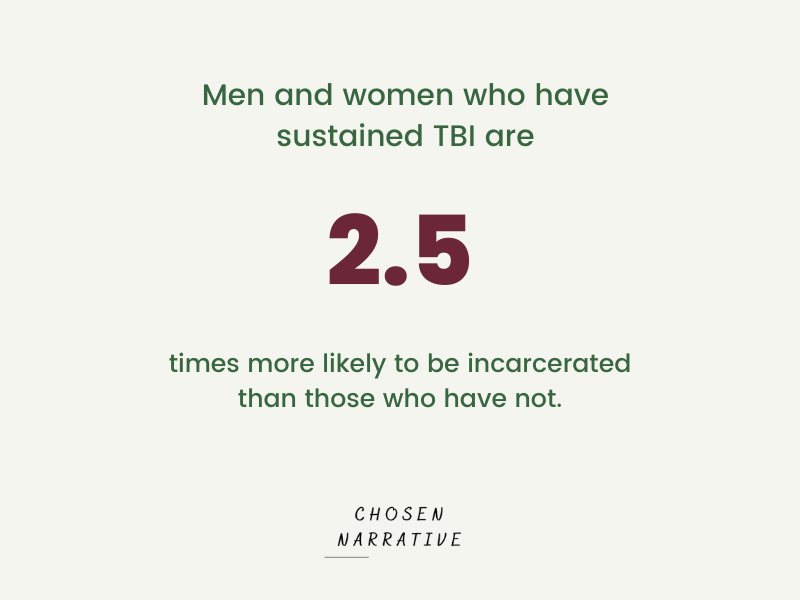
In many instances, a history of traumatic brain injuries (TBI ) comprises multiple injuries that contribute to a cumulative impact. This research has been further expanded to reveal that men and women who have sustained TBI are approximately 2.5 times more likely to be incarcerated than those who have not.
Melissa Bickford writes for The Marshall Project about brain injuries, describing them as the “criminal justice issue nobody talks about.” Through her firsthand experience of navigating the criminal justice system with a brain injury caused by domestic violence, she describes the repercussions of her trauma.
TBI impacts both victims and perpetrators, and some individuals are pushing legislation to get neuropsychological exams for people inside. By impacting one’s ability to manage emotions, brain injuries contribute to impulsive and agitated behavior. It becomes increasingly more difficult to build a healthy and productive life with untreated brain injuries.
Rehabilitation vs. Punishment
Incarceration is a consequence of action, but it still costs taxpayers money to house and feed those who have broken the law (as well as the wrongfully accused). Yet rates of criminal recidivism worldwide are reported to be as high as 50%, which begs the question — should incarceration be a form of punishment or a rehabilitation method?
Putting my personal opinions aside, the numbers show that rehabilitating offenders reduces recidivism, saves money, and makes communities safer. But more than that, rehabilitation reduces the severe mental health impact on incarcerated individuals.
In the United States, the “get tough on crime” approach has shifted the prison policy from being grounded in rehabilitation to being a severe form of punishment. The result is mass incarceration, with a higher percentage of the US population involved in the criminal justice system than in any other developed country.
Unfortunately, many incarcerated individuals have serious mental health illnesses, and need a nuanced approach to rehabilitation is needed.
Yet limited resources mean there are insufficient mental health professionals in prisons to make a meaningful difference. Basic philosophical differences between rehabilitative psychology and punishment-centric corrections also present a problem.
The dramatic reduction of inpatient mental health care has framed mental illness as a crime. Consider the following statistics from NYSBA:
- American citizens with mental illness are ten times more likely to be incarcerated than they are to be hospitalized
- More than 70% of people in American jails and prisons have a minimum of one diagnosed mental illness or substance use disorder


Incarceration can cause lasting damage to mental health by triggering and worsening symptoms of mental illness — which lingers long after someone is released from behind bars.
Sadly, the crisis is worsening, and psychologists and advocates are feverishly working to present literature that could shift the direction to a productive and effective one.
Early Intervention methods
Understanding the risks of mental health behind bars, it’s important to implement early intervention efforts to prevent further damage.
There are reputable organizations, such as The Disabilities Trust, in collaboration with Royal Holloway, University of London, which implemented a study on brain injuries in female offenders and how a support pathway can better manage the health, cognitive, and behavioral issues that impact the likelihood of reoffending.
Their findings suggested the following changes in the system:
- Including brain injury screening as a routine part of the induction assessment on entry to prison on probation services
- All prison and probation staff are to receive brain injury awareness training
- Provision of brain injury support in prisons and probation settings
- Assurance that brain injury support should be aligned with gender-informed practice
- Further research to examine the potential effect of brain injury on reoffending behavior
Similar action points are offered by Transition to Adulthood, which recommend criminal justice screening and assessment, various criminal justice responses, training for criminal justice professionals, managing young people with brain injuries in custody and probation settings, commissioning appropriate and effective services, and introducing early responses to children and young people with brain injuries.
There is a lot more opportunity for research and implementation for early intervention methods and more effective rehabilitation methods to reduce the prison population, offer necessary care for offenders, and make communities more safe.
What factors influence migrant women’s feelings of isolation? Why might these feelings persist despite having a husband and children? How do experiences of discrimination impact migrant women’s emotional, mental, and physical health?
The specific factors contributing to isolation vary slightly depending on the woman’s gender identity, ethnicity, migration status, religion, education level, and host country’s policies, among other factors. However, studies across situations reveal a few common factors contributing to isolation.

Language barriers and economics isolate women and increase the risk of abuse from their partners or employers (Mirza, 2016). Even with the UK government’s “right-to-exit” rationale, the question persists whether migrant women can survive economically without their community and marital relationship.
Often, migrant women originate from countries where community and family serve as support structures. In a new, foreign country, this support system does not exist. The opportunity to find community is limited by language barriers and economic dependence on partners who keep them isolated as a form of control.
Pérez introduces discriminatory stereotypes as another factor when discussing the experience of Venezuelan survival migrants in Peru (2021). Socio-racial hierarchies in Peru determine integration and/or opportunities for socio-economic mobility, which has found Venezuelan women stuck in exploited gendered services.
Persisting isolation despite husband and children
Despite many women migrating with their family unit, feelings of isolation often persist.
One of the reasons involves cultural differences and the shift in gender roles. In many instances, cultural norms from countries of origin position the woman as the caregiver and homemaker while the man is the financial provider. When migrating, women are willing to settle for low-paying jobs (often below their skill/educational level) to provide for their families. At the same time, men are more likely to consider poorly-paid jobs as personal humiliation (Karimi et al., 2019).
The shift in gender roles and cultural clash with the host country’s norms introduces new stressors into the family and limits opportunities for migrant women to connect with the community for support.
Unfortunately, domestic violence also contributes to persisting isolation despite the family unit. Domestic violence in migrant communities goes largely unreported for various reasons, including lack of support, language barriers, misinformation, economic dependence, and visa restrictions.
Impact of discrimination on migrant women’s emotional, mental, and physical health
Research has revealed how discrimination impacts migrant women’s emotional, mental, and physical health. For example, Røysum elaborates on the discrimination in the workplace that harms resourceful migrant women’s self-efficacy and identity, as their competencies in their home country are not recognized in the host country (2020).
Mirza describes the discriminatory legal structure involved in migration that empowers perpetrators of abuse to brandish a woman’s access to a visa as a tool for misuse. Women remain trapped in abusive relationships to avoid economic distress or deportation (which includes the risk of rejection in their homeland for abandoning their husbands) (2016).
Gaps in migration data and discriminatory policy have left migrant women exposed to a vulnerability where they cannot connect with service providers. In other instances, their efforts are thwarted by the lack of cultural understanding and stereotypes (Karimi et al., 2019).
Some women have clung to remnants of home to alleviate the emotional and mental stress of discrimination, such as migrant women who choose to wear the hijab in Germany. Even then, the decision to liberate themselves in this way can lead to racism, violence, and exclusion (Kook & Paz, 2021).
References
- Karimi, A., Okeke-Ihejirika, Ph., & Salami B., & (2019) African immigrant women s transition and integration into Canadian society expectations stressors and tensions, Gender, Place & Culture, 26:4, 581-601.
- Mirza, N. (2016). The UK government’s conflicting agendas and ‘harmful’ immigration policies: Shaping South Asian women’s experiences of abuse and “exit,’ Critical Social Policy 36, 4, 592-609.
- Paz, A., & Kook, R. (2021). It reminds me that I still exist Critical thoughts on intersectionality refugee Muslim women in Berlin and the meanings of the hijab, Journal of Ethnic and Migration Studies, 47:13, 2979-2996.
- Perez, L. M., and Ugarte, D. (2021). Venezuelan women in Peru: At the borders of nationality, gender, and survival migration. Journal of International Migration and Integration 22, 1313–1327.
- Røysum, A. (2020) The job-seeking experiences of resourceful female immigrants and the impact on their self-efficacy beliefs. European Journal of Social Work, 23, 1, 173-184. https://doi.org/10.1080/13691457.2018.1476328
The Innocence Project works for free to free innocent people who have been incarcerated, prevent wrongful convictions, and strives toward creating an equitable justice system. Below, we share a few stories of the lives impacted by their work — while revealing the flaws in the system.
Malcolm Alexander
The Innocence Project works to free innocent people who have been incarcerated, prevent wrongful convictions, and strives toward creating an equitable justice system.
In 1980, Malcolm Alexander was convicted of sexual assault in the state of Louisiana and sentenced to life without parole. Due to an ineffective trial lawyer and fallible eyewitness identification procedure, Malcolm was falsely convicted and served 38 years in prison — for a crime he did not commit.
One year after another Black man sexually assaulted a white woman, Malcolm had a consensual experience with a white woman who asked for money, and then later accused him of sexual assault. While the police couldn’t corroborate the woman’s story, they did place Malcolm’s photograph in the system. Ultimately, this action included him in the array of the 1979 crime - of which he was falsely convicted.
In 1996, the Innocence Project picked up Malcolm’s case, only to find that the rape kit and semen-stained evidence had been destroyed four years after his conviction. In 2013, hair evidence emerged from the scene, and DNA proved the strands did not match Malcolm or the victim.
After a lengthy battle to prove innocence, Malcolm was exonerated.

Antonio Beaver
Antonio is an African American man who was sentenced to 18 years in the state of Missouri for carjacking — only he didn’t commit the crime.
In 1996, a white woman was parking her car when an African American man attacked her with a screwdriver and stole her car. He got away with the vehicle, but not before leaving a little bit of blood on the driver’s side door.
Nearly one week later, Antonio Beaver’s resemblance to the composite sketch found him standing in a lineup, even though he’s appearance was strikingly different to the victim’s initial description. Due to tragic eyewitness misidentification and an unlucky jury, Antonio was found guilty of first-degree robbery.
In 2001, Antonio filed a motion on his behalf requesting DNA testing, and while the state opposed the motion, the Innocence Project accepted the case and filed another brief. This time, the state agreed to DNA testing and Antonio was excluded as the source of the blood in the car. In 2007, Antonio was exonerated at the age of 41, having spent more than a decade behind bars.

Kenneth Adams
Kenneth Adams is another exoneree who was released after the Innocence Project helped to prove his innocence — but not before he spent a shocking 18 years behind bars for a crime that he didn’t commit.
In 1978, Kenneth was wrongly convicted of rape and double homicide, receiving a sentence of 75 years behind bars. How did he get to be in this tragic situation?
A false tip from a man who lived near the crime scene led to Kenneth and three other men (known as the Ford Heights Four) being questioned by the police. While in police custody, Kenneth was held without legal counsel. His girlfriend then offered false, incriminating testimony to a grand jury, only to withdraw her story at a preliminary hearing.
Despite these shaky grounds, Kenneth was still found guilty. It took 18 years, but DNA testing ultimately exonerated all four men. It also implicated three other men, two of whom confessed and were found guilty. As it turns out, these men were placed on police radar during the investigation, but authorities did not pursue the lead.
Today, Kenneth Adams lives as a free man. The Ford Heights Four settled civil claims for $36 million against the original police officers, with Kenneth receiving $8 million. It’s made history as the largest civil rights payment in American history.

Steven Barnes
The story of Steven Barns wraps up our stories from the Innocence Project, but by no means does it tie a bow to the work done by the incredible organization.
In 1989, a horrific rape and murder occurred in upstate New York. The combination of a questionable eyewitness and three types of unvalidated forensic science found Steven guilty of a crime he didn’t commit. Based on eyewitness reports that incriminated Steven’s truck (more than him), the doubt of his innocence was deepened when a polygraph test returned inconclusive results.
Yet authorities didn't have enough to keep Steven behind bars, and he was released without charges. Two years later, investigators circled back to Steven and requested DNA samples. The case went to trial, where three forms of unvalidated forensic science were used against Steven.
After a series of suspicious words and evidence, the testimony of a jailhouse informant was the final nail in the coffin, and Steven was sentenced to 25 years to life. The Innocence Project started representing Steven in 1993 and secured DNA testing on his behalf in 1996.
A decade later, in 2007, the case was reopened, and advanced DNA testing found Steven exonerated — but not before he spent 20 years behind bars. Today, Steven lives as an exonerated man, winning a settlement of $3.5 million for wrongful conviction. He now works with youths through Oneida County, New York Workforce Development.

Donate to the Innocence Project
These are just a few of the inspiring stories of work done by the Innocence Project, tirelessly working to right the wrongs of the criminal justice system. The team of committed to restoring freedom for the innocent and transforming the systems responsible for their unjust incarceration. Each of these efforts is guided by science and deeply grounded in antiracism.
While you may not have the legal expertise to make a difference or the scientific understanding to work with DNA testing, you can donate to the cause. Generous supporters can offer to donate online, give monthly, support exonerees post-release, transfer gifts of stock, and more. No value is too small to make a difference.
Find out more about donating to the Innocence Project.
Looking for more organizations to support? Find out more about The Marshall Project!
The goal of achieving justice is noble and admirable, but the meaning of justice differs around the world. For example, consider how legal processes differ from one country to another.
Features of legal systems
Whether you are a civilian, a legal professional, or a civil servant, it helps to understand the different features that establish legal systems — and limit the power.
- A national constitution (written or oral)
- Legislation, laws, and statutes that are prepared and authorized by a governing body
- Subordinate laws (bylaws) that are authorized by a network of bodies that hold powers granted by primary legislation
- Traditions, customs, and established behaviors practiced by the court to maintain a consistent legal environment
- A civil, common, or other code of laws that forms the primary source of principles and legal practices, such as a religious system
A combination of the above features has led to hundreds of unique systems of law used throughout the world. The overlap (and gap) of systems, rules, and policing has opened opportunities for transnational crime and empowered organized criminal organizations to find loopholes.
Point to ponder: what role does international law play in governing a global community, and how does it impact the different traditions, customs, and laws worldwide? Take note that sometimes, politicians play with statistics, and legal processes should be considered in a holistic view.

What is International law?
“International law is an independent system of law existing outside the legal orders of particular states.” - Brittanica
Rather than rely on a superior authority to enforce such rules, international law is considered a binding agreement among the states involved.
Who established international law?
The term international law was coined by English philosopher Jeremy Bentham who lived from 1748 to 1832.
What is described in international law?
International law has evolved over the years and covers various issues. For example, war, peace, diplomacy, human rights, economic and trade issues, space law, and even international organizations.
Although a legal order, international law strongly focuses on ethical principles and concerns, particularly human rights.
How is international law governed?
The United Nations General Assembly consists of representatives from 190 countries, operating as a forum that adopts multilateral treaties. While it appears as a legislature, the UN cannot issue binding laws. Instead, resolutions set forward by the UN only serve as a recommendation.
Different types of international law
There are different types of international law determined by the parties involved. Most commonly, there are treaties and international customs.
- Treaties, also known as conventions, agreements, pacts, general acts, charters, and covenants
- International customs

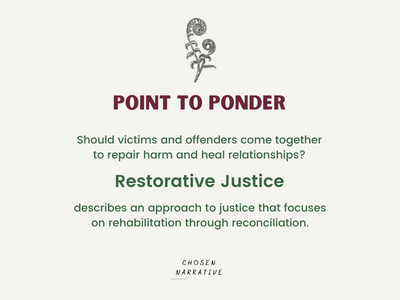
Restorative justice describes an approach to justice that strives to repair the harm caused by criminal activity. It allows different types of victims and perpetrators to communicate and address their needs in the aftermath of a crime.
Goals of Restorative Justice
If a case goes to court, Restorative Justice happens post-conviction and can occur while the perpetrator serves time in prison.
Restorative justice strives to achieve the following goals:
- Create a space for open communication between victims, offenders, and communities
- Encourage meaningful engagement and accountability
- Provide an opportunity for healing, reparation, and reintegration
- Reduce recidivism
- Produce greater satisfaction for victims
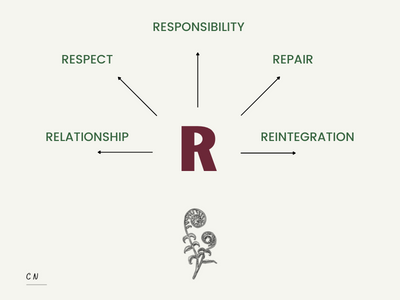
The essence of restorative justice can be summarized with these five principles:
- Relationship - strive to fix a damaged relationship
- Respect - respect is key to making relationships work
- Responsibility - everyone must take personal responsibility for their actions
- Repair - once respect and responsibility have been established, the element of repair slowly replaces thoughts of revenge and/or punishment
- Reintegration - encourages collaboration with the community and recognizes the benefits a person can bring to the table
Restorative justice is based on principles of respect, compassion, and inclusivity. It uses processes to achieve its goals, such as conferences and dialogues guided by skilled facilitators.
Restorative justice is a holistic approach to justice that addresses the needs of victims, including their material, financial, emotional, and social needs.
Does Restorative Justice Work?
The concept of restorative justice may sound productive, but the politics of restorative justice needs to be applied correctly (and carefully).
There are a few promising findings but little scientific evidence to prove that restorative justice works.
The majority of the programs have been implicated for juvenile offenders. While the results are mixed, there is good evidence that programs focused on minors contribute to reducing recidivism.
For example, one study revealed that 91% of victim participants participating in a restorative justice program in California were willing to participate in another conference. The same percentage would recommend the process to a friend.
In Winnipeg, an evaluation of a restorative justice program revealed that participating offenders had lower recidivism rates (15%) than the matched group of probationers (38%).


Communities for Restorative Justice have revealed more insights, showing that restorative justice programs have a more positive impact than traditional criminal justice.

There’s no denying that restorative justice is a heavy process that demands an open mind from both victims and offenders. There are instances when the program falls flat and others where major breakthroughs are achieved (for both parties).
Real-Life Examples of Restorative Justice
Statistics are useful in driving policy and systemic change, but it’s real-life human stories that change hearts.
Impacting the lives of (former) offenders
Restorative Justice Exchange is an initiative of the Prison Fellowship International which is committed to strengthening restorative practices in programs for prisoners, victims, and families of prisoners.
First, restorative justice changes the hearts and minds of those who have caused pain and anguish, inspiring them to change their lives for the better. One person involved in The Sycamore Tree program says the following.
Jose Fonseca, a former gangster in Columbia, served time for shooting a rival gang member. After serving time, he returned to the same neighborhoods to share his testimony and set an example for the youth. Restorative justice taught him about the ripple effect of his crimes — and he couldn’t shake the realization. He has even found peace with his victims.
Impacting the lives of victims
But it’s not only the former offenders that benefit from restorative justice. Consider Rob’s story, which has been shared by Why Me?
His son was robbed and attacked by three youths. One of the attackers was convicted to six months behind bars, and Rob was offered the opportunity for a restorative justice meeting. A year after the attack, the meeting took place, and Rob recalls his experience.
“After the attack, my son was clearly shaken and upset. I on the other hand was left with anger and no direction in which to channel it. I attended court but the process allowed no voice for the victim. Taking part in the Restorative Justice meeting was a chance to open up a conversation, in which both my son’s attacker and I could both listen and equally be heard. I anticipated that he would not answer the majority of my questions but he did listen to what I had to say about his senseless choice of actions on the evening he attacked my son.
I was also able to understand the young person’s background. Whilst not excusing his behavior that night, I did find myself having a certain amount of empathy and consideration for his circumstances which I was not expecting. At the end of the meeting I looked him in the eye, shook his hand and wished him all the best in his future. I hoped that with the benefit of him taking part in Restorative Justice from an offender’s perspective, he would think carefully about his future choices.
When I left the meeting, it felt like a weight had been lifted from me that I didn’t even realize I was carrying. I felt like my anger from the time of the attack had subsided but what I had unwittingly done was suppress it. Now finally after this meeting all the unwanted negativity I had held was finally and permanently gone.”
It’s no secret that youth from racial and ethnic minorities experience difficulty in the justice system, and diversion strategies are no different.

Brittanica describes diversion as “any of a variety of programs that implement strategies seeking to avoid the formal processing of an offender by the criminal justice system.”
Essentially, diversion carves a path for rehabilitation and reform outside of prison. When it comes to managing criminal behavior among juveniles, diversion offers juvenile offenders a chance to get an education and make the most of their lives without a criminal record.
Unfortunately, there is a massive disparity between white youth and youth of color being diverted, meaning that youth of color get caught in the criminal justice system.
Benefits of youth diversion strategies
The Sentencing Project describes how diversion should be applied to all youth of all racial groups and can be exercised both pre-arrest and pre-court. In both instances, there are benefits to youth development, showing the following research-proven benefits;
- Less likelihood of future arrests
- Less likely to be incarcerated
- Less violence is committed
- Higher rates of school completion and college enrollment
- Earn higher incomes as adults
Diversion programs may include mental health programs or substance abuse rehabilitation efforts. Proper screening is needed to determine the root cause of delinquency, and then education and tutorial services follow.
Some diversion programs include victim awareness classes, job skills training, crisis intervention, family counseling, and quality recreation and organized sports programs.

Difficulties facing diversion
If youth diversion offers so many benefits, why isn’t diversion applied in more circumstances?
Sentencing Project dives into one of the biggest problems with diversion programs — the subjective bias that haunts the system.
State laws seldom stipulate clear criteria for diversion, leaving the decision in the hands of biased individuals. Unfortunately, the issue affects certain groups of people more than others.
There are three main pillars of bias evident in the diversion system.
- Bias against juveniles of color
- Bias against families of color
- Unequal justice by geography (vast differences in diversion practices between different jurisdictions
Problematic practices heighten these disparities.
For example, unnecessary rules limit eligibility for diversion to youth referred to court for the first time on misdemeanor or status offenses.
Other issues include;
- Poor efforts to inform youth and their families regarding participation
- Requirement that the juvenile admits guilt to qualify
- Rules that serve as a barrier for families to meet program requirements
- Fees or costs involved in the participation of diversion programs
- Lack of support for youth and families at risk of failing diversion
Overcoming the obstacles facing diversion strategies
The first step to overcoming the obstacles that face diversion strategies is to acknowledge they exist. With a clear understanding of the bottlenecks and biases in the system, the challenges can be overcome effectively.
The Sentencing Project further reveals how some states are already incorporating strategies to overcome these issues. For example:
- Funding is provided to support diversion programs
- Intensify efforts to contact family members
- Reduce imbalances in diversion opportunities by setting standard guidelines
- Minimize consequences for non-compliance with diversion rules and requirements
- Create new mechanisms to support youth in need Improve data collection for a more accurate representation of progress
There are a few key fundamentals that local advocates and systems leaders should focus on. The following strategies can help diversion strategies become a positive alternative to incarceration.
- Reducing racial and ethnic disparities to make diversion more accessible
- Reassessing rules that exacerbate disparities Identifying and responding to implicit bias
- Demanding that youth justice systems prepare racial impact statements to understand existing policies and practices better
- Focusing on data to reduce disparities and enhance opportunities
- Appointing an oversight body to track progress
Ultimately, diversion has incredible potential in youth justice reform, and aggressive action is needed to counter racial and ethnic disparities in diversion programs.

Did you know that children (under the age of 18) can receive life sentences in 73 countries, including the United States?
Even more tragic than juveniles being incarcerated without adequate rehabilitation is that most countries fail to keep accurate records of the number of children who are incarcerated for breaking the law, resulting in a lack of accountability.
As a guideline, United Nations Children’s Fund, UNICEF, has estimated that more than one million children are behind bars worldwide. Considering that many of these children (who grow into adults) endure harsh and demeaning conditions and are deprived of education, the possibility of recidivism is high.


We recently shared how exoneree Patrick Pursley has invested time and energy into reaching at-risk youth — but what obstacles does he have to tackle?
Individual Risk Factors
The first major risk is the individual self, including both controllable factors as well as intrinsic.
Consider the following;
- Involvement in general offences and substance abuse before the age of 12
- Experimentation with drugs, alcohol, and/or tobacco
- Males tend to be more likely to be violent and aggressive than females
- Psychological conditions, including behavioural and mental health struggles
- Genetic conditions and birth complications that affect the brain and nervous system
In many instances, these risk factors appear small on their own but are compounded when combined with one another and external factors such as family and community.
Family Risk Factors
Family risk factors introduce the age-old argument of nature vs nurture, playing a role on both sides. On the one hand, natural genetics are passed down from parent to child, and on the other hand, a child's upbringing contributes to their nurtured development.
Studies reveal that parents represent an environmental risk factor rather than a genetic one, suggesting that children learn violent and antisocial behaviour by observing their parents.
Discipline
Discipline (or the lack thereof) remains a pertinent factor to consider when studying the violent tendencies of a child. While children need consistent, reasonable discipline, abusive discipline can shift the boundaries of acceptable treatment toward others.
Broken home
Parental separation and divorce, as well as single-parent homes, continue to present a significant obstacle. The stress and pressure of these changes, as well as the lack of support and supervision, can impact the stability of the home structure and lead to violent behaviour.
Antisocial behaviour
Parents who lack interpersonal skills and personal efficacy can fail to develop their child’s social competence. As a result, children can develop a bitter and resentful attitude. Parents that demonstrate a disregard for right and wrong, persistent lying and disrespectful attitudes can establish an ill-guided understanding of what is normal. In the process, these standards can encourage or make excuses for criminal behaviour.
Community Risk Factors
The peer environment and surrounding community are two of the most discussed risk factors for juvenile delinquency. It’s also the area with the most potential for intervention.
Some examples of community risk factors include;
- Peer group - aggression among friends can be contagious
- Lack of education opportunities
- Socially disorganised communities
- Communities with high crime rates, gang activity and drug use
Research shows that juvenile arrest rates are higher among impoverished youth, and the general trend reveals family violence and gang activity accompany impoverished communities.
Consider the stories told in Warren’s Unorthodox project focused on gang activity and rehabilitation in South Africa as an example of gang culture influence.
Tragically, these risk factors create a dangerous cycle of crime and hopelessness. What starts as the decision to vandalise, commit petty theft or join a gang has severe knock-on effects. It robs juveniles of education and replaces admirable role models with dangerous icons.

Juvenile Detention vs. Adult Detention
Actions have consequences, and sometimes being in the wrong place at the wrong time also has consequences. Prisons, sometimes called correctional facilities for PR purposes, should work to amend criminal behaviour, upskill offenders and address mental health concerns.
So, what happens when a minor is sent to juvenile detention after their behaviour is shaped by individual, family and community risks?
First, it’s important to acknowledge that not all minors are treated as such. According to the Juvenile Law Center, thousands of children are locked up in adult prisons and jails. In some instances, incarcerated youth are exposed to strip searches, solitary confinement and abusive practices, which add to emotional trauma and disrupt healthy development.
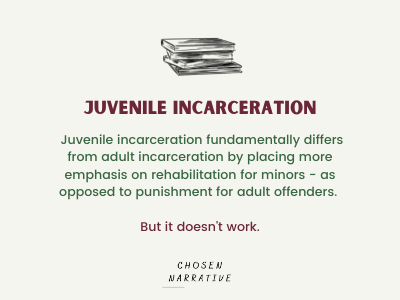
In theory, juvenile incarceration fundamentally differs from adult incarceration by placing more emphasis on rehabilitation - as opposed to punishment for adult offenders.
By separating juvenile offenders from adults, the hope is that they will have a second chance at successful social integration. Juvenile facilities usually have very tight schedules, incorporate education and provide access to more programs.
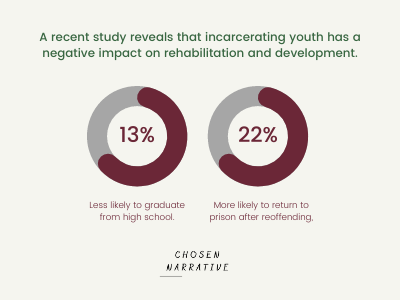
Sadly, the reality is often very different. A new study by economists reveals that existing juvenile incarceration increases the odds of recidivism and reduces the possibility of the individual graduating from high school.
The study compared two groups of kids in Chicago. One group received detention for a criminal act, while others did not (for similar crimes). Ultimately, the incarcerated youths were 13% less likely to graduate from high school and 22% more likely to return to prison.
The Solution to Juvenile Detention
Existing youth prisons are not only failing juvenile offenders but also costing taxpayers a lot of money to conduct a fruitless mission. For example, it costs approximately $142,000 per year to incarcerate one young person each year in Virginia, and the recidivism rate is 75%.
In contrast, Youth Advocate Programs offer services in the home and community settings and only cost $27,000 a year. Many of these programs incorporate restorative justice principles that strive to repair harm to victims and encourage youth to give back to their communities.
Various research studies have shown positive reform from the following efforts.
- Establishing a system of care that is focused on meeting the mental health and related needs of youth, such as community-based services and supports.
- Multi-system integration methods to help children in the child welfare, behavioural health and/or juvenile justice systems
- Introducing family-focused alternatives to court intervention
- Establishing new juvenile defence standards for legal teams
- Imposing structure through state-subsidized extracurricular activities that teach valuable life lessons
- Engaging minority groups to better understand lifestyles and decision-making
- Incorporating more rehabilitation efforts as a consequence of criminal behaviour
- Adopting a personalised approach to individual cases
- Limit children from being housed in the same facility as adult offenders
The numbers don’t lie. Youth prisons don’t work.
Additional sources:
What would you do if you spent 25 years incarcerated for a crime that you didn’t commit?

While many would be angry and vengeful, Patrick Pursley has chosen to always work for love, which he believes to be the highest vibration of the human spirit.
Patrick Pursley was wrongfully convicted of a 1993 murder. Despite no blood, fingerprint, or DNA evidence to tie Patrick to the crime, political pressure and inconsistent testimonies from a ballistic expert found him convicted.
Despite these tragic circumstances, Patrick has focused on reinventing his story and helping others overcome their vulnerable position.
I Am Kid Culture Movement
Not only did Patrick dedicate time and effort to becoming a jailhouse lawyer, but since his release, he has also started the I am Kid Culture movement which is committed to creating solutions to gun violence. Its mission is to reach at-risk youth to encourage them to set goals, pave career paths and have access to guidance through arts and curriculum.
Causes for at-risk youth in the United States
- Growing up in an area with heavy gang activity
- History of violence in the home
- Too little adult supervision
- Unstructured free time
- Lack of positive role models
- Sense of hopelessness due to limited opportunities
- Underlying mental health issues or behavioural disorders
By reducing the gang and gun violence, Patrick Pursley has tapped into the good of human nature to empower youth.
While each country has different legal frameworks, Article 7 of the Universal Declaration of Human Rights (UDHR) states "All are equal before the law and are entitled without any discrimination to equal protection of the law."
Unfortunately, this basic principle of liberalism exists more in theory than in practice.

Recently, a digital side event to the 31st Session of the UN Commission on Crime Prevention and Criminal Justice was hosted on the topic of decisive action to reform laws that criminalise poverty and status. The panel was joined by criminal justice leaders from around the world, including South Africa, Brazil, the West Indies and more.
UN Commison on Crime Prevention & Criminal justice
Various issues were raised, including the serious issue of putting people behind bars not because of their actions, but because of who they are. In the opening remarks, Rachel Rossi describes the shared goal of equal justice under law for all. The law, if applied fairly and wisely, can serve as an instrument of justice. But for the poor, it can lead to a series of profound problems.
Representing the US Justice Departments Office for Access to Justice (ATJ), Rachel Rossi outlined the newly-released equity plan that intends to increase access to justice in five key areas, removing environmental barriers that limit access to justice.
ATJ efforts include reforms against acts of hate. Consider that Anti-Asian hate crimes have increased by nearly 150% in 2020 and that the FBI reports that hate crime is the highest that it has been in more than a decade.

Justice is layered and complicated, manifesting differently for groups of people. Rachel concluded her presentation with the words of Bryan Stevenson, social justice activist who said, “the opposite of poverty isn’t wealth but instead it is justice.”
Vagrancy Laws and criminalising poverty
Offences, such as breaking vagrancy laws, are criminalised, despite not being criminal in nature. These laws impact hawkers and informal traders, a solution for many people who can’t find employment.
Yet as Judge Makume says, “These laws are inconsistent with the right to dignity.”
Judge Makume is the Chairperson of Legal Aid South Africa, an organisation which strives to represent marginalised people in South Africa —- and they have their hands full.
According to the World Bank report, South Africa is the most unequal country in the world. Judge Makume joined the discussion for the 31st Session of the UN Commission on Crime Prevention and Criminal Justice, shedding light on how poverty in South Africa is largely impacted by strong racial, gender, age and spatial dimensions.

Many cities in South Africa have criminalised the marginalised and poor through poverty laws, with a lot of these marginalised communities being formed by immigrants from neighboring countries.
Vagrancy laws are often vague and overly broad, leading to arbitrary and discriminatory action. Ultimately, enforcement of vagrancy laws are done on the basis of economic status — and so the cycle of poverty continues.
Criminalisation by Status
The criminalisation of poverty is a striking example of criminalisation by status.
The United Nations Human Rights standards have been emphasising that the criminalisation of poverty is unacceptable, but as a community, we need to believe it to be true in order to lobby for change. So, why should we address the criminalisation of poverty and status?
Olivier De Schutter, UN Special Rapporteur on extreme poverty and human rights, attended the discussion for the 31st Session of the UN Commission on Crime Prevention and Criminal Justice. He suggests the following suggestions on why we should address the criminalisation of poverty by status.
- It feeds stereotypes about people in poverty. They are described as having chosen their position and seen as a threat to society and this is the symbolic message that the law sends.
- All too often, criminalising life-sustaining activities is a pretext for not addressing the structural causes of poverty.
- It propels the vicious cycle between poverty and criminalisation. Poverty leads people to be criminalised because they can not afford to pay fines or taxes, and they can’t live decently. As a result, they are further marginalised and pushed into poverty.
Assessing your current assumptions is the first step toward change.

They warn us not to believe everything that we read on the internet, and the sentiment holds true for what is shared in the media.

You may have heard stories about the War on Drugs, led by President Nixon. The period started in the 1970s and drew a definitive line between different racial groups in the United States.
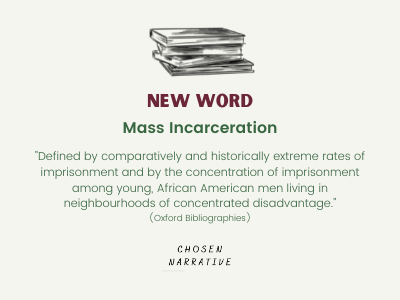
Esteemed author, Michelle Alexander, pinpoints this period as a pivotal moment in the history of mass incarceration.
In her book, “The New Jim Crow: Mass Incarceration in the Age of Colour-blindness” she notes that the rate of drug crime was actually *declining* instead of rising when the war was declared.
A stellar book on social justice
She compares the statistics and notes how the US incarceration rate quadrupled between 1960 and 1990. This figure was compared to countries with a similar incarceration in 1960. For example, Germany’s incarceration rate remained the same while Finland’s incarceration rate fell by 60%.

Michelle Alexander writes, “The stark and sobering reality is that, for largely unrelated to actual crime trends, the American penal system has emerged as a system of social control unparalleled in world history.”
The media played a significant role in driving the War on Drugs, using sensational headlines and single-sided narratives to inspire fear and panic.
Ultimately, it’s important to consume information conscientiously and with an open mind.
On UNESCO's World Book Day, 23 April 2022, we celebrated the power of knowledge and the written word with a recommendation.

The New Jim Crow: Mass Incarceration in the Age of Colourblindness was written by Michelle Alexander and has been described as “The Bible of a social movement” by the San Francisco Chronicle.
The book studies the history of the United States and how racial segregation has evolved to placate those who aren’t paying attention.
Michelle opens her book with the following words, “This book is not for everyone. I have a specific audience in mind - people who care deeply about racial justice but who, for any number of reasons, do not yet appreciate the magnitude of the crisis faced by communities of colour as a result of mass incarceration.”
Add Michelle Alexander's thought-provoking book to your reading list and pick up a copy wherever you buy your books!